
Most people book their first massage for one of two reasons: something hurts, or everything feels wound too tight.
If you've been carrying tension between your shoulder blades for weeks, waking up with a stiff neck, or hitting a wall in your training recovery, massage therapy is worth understanding properly — not as a spa treat, but as regulated healthcare.
Here's what registered massage therapy genuinely does, who it helps most, and what a first appointment at our Port Credit clinic actually looks like.
7 Evidence-Backed Benefits of Massage Therapy
1. Relief From Muscle Tension and Persistent Pain
This is the one people feel first. Sustained pressure on tight muscle tissue and trigger points reduces resting muscle tone and eases the local discomfort that comes with it.
It's most commonly used to help manage:
- Lower back and gluteal tightness, including tension contributing to sciatic symptoms
- Neck, shoulder and upper back stiffness — the "tech neck" pattern from laptop and phone use
- Ongoing muscular pain associated with conditions like fibromyalgia and osteoarthritis, as part of a broader care plan
Massage manages these symptoms well. For longer-standing problems it works best paired with strengthening work, which is why we often run it alongside physiotherapy rather than on its own.
2. Lower Stress and a Calmer Nervous System
Massage reliably shifts your body out of a sympathetic "on alert" state into a parasympathetic "rest and recover" one. In practice that means a slower heart rate, slower breathing, and a drop in the physical restlessness that comes with sustained stress.
Research in this area consistently shows reductions in self-reported anxiety and improvements in mood following massage. If you carry stress physically — jaw, shoulders, upper back — the mental effect and the muscular effect tend to arrive together.
3. Fewer, Milder Tension Headaches
A large share of everyday headaches are muscular in origin, driven by tightness in the suboccipital muscles at the base of the skull, the upper traps, and the jaw.
Targeted work through the neck, scalp and shoulders can reduce the frequency and intensity of tension-type headaches for many people. It's one of the most common reasons clients book with us, and often one of the fastest things to respond.
4. Better Local Circulation
Massage increases blood flow to the tissue being worked on. Better local circulation means more oxygen and nutrients reaching the area, which supports tissue recovery and contributes to the warm, loosened feeling afterwards.
A note on "flushing out toxins": you'll see this claim everywhere in massage marketing. It isn't accurate — your liver and kidneys handle that, and massage doesn't change it. The circulatory benefits are real; the detox framing isn't. We'd rather tell you the truth about what we do.
5. Improved Flexibility and Range of Motion
Long hours seated shorten your hip flexors and chest muscles while your upper back and glutes go quiet. The result is a posture that feels stuck and joints that don't want to move through their full range.
Massage reduces resistance in shortened, guarded tissue, which makes stretching and movement work more comfortable and more effective. Think of it as opening a window — you still have to do the mobility and strength work to keep it open, but it makes starting far easier.
6. Faster, More Comfortable Recovery From Training
For runners, lifters and weekend athletes, the best-supported benefit is a reduction in delayed onset muscle soreness (DOMS) and an improvement in how recovered you feel in the days after hard training.
Massage also helps maintain tissue mobility around older injuries and scar tissue as part of a rehab plan. It won't replace your recovery basics — sleep, food, sensible load progression — but it makes the back half of a training block considerably more tolerable.
7. Better Sleep
Less pain and a calmer nervous system make it easier to fall asleep and stay asleep. Clients frequently tell us the night after a treatment is the best sleep they've had in weeks — and since sleep is when the bulk of tissue repair happens, that benefit compounds.
Which Massage Technique Is Right for You?
You don't need to decide before you arrive — your therapist will assess and recommend. But it helps to know the options.
- Deep Tissue Massage — Slower, firmer work through the deeper muscle layers. Best for stubborn knots, long-standing tightness, and people who find lighter pressure doesn't touch the problem. Expect some tenderness for a day afterwards.
- Swedish Massage — Longer, flowing strokes at lighter to moderate pressure. Best for general tension, stress relief, and anyone new to massage or sensitive to firm pressure.
- Sports Massage — Built around athletic demands, whether that's pre-event preparation, post-event recovery, or in-season maintenance for a specific sport.
- Trigger Point Release — Sustained, focused pressure on the specific tight bands that refer pain elsewhere. This is what's used when a knot in your shoulder is producing a headache.
- Myofascial Release — Slower, sustained work on the connective tissue surrounding your muscles rather than the muscle belly itself. Useful for broad restriction and areas that feel bound down rather than knotted.
- Head Massage with Acupressure — Focused relief through the scalp, temples and base of the skull. Popular with headache, sinus pressure and jaw tension clients.
- Add-ons — Cupping therapy and hot stone therapy can be integrated into a session for enhanced tissue release where appropriate.
Deep Tissue or Swedish — How Do I Choose?
The short version: if you want to feel relaxed, Swedish; if you want to feel changed, deep tissue.
Deeper is not automatically better. Pressure that has you clenched and holding your breath is counterproductive — your muscles guard against it. Effective pressure should feel intense but breathable. Tell your therapist during the session, not afterwards; adjusting pressure is completely normal and expected.
Who Gets the Most Out of Massage Therapy?
- Desk workers and hybrid workers — For the postural strain of long screen hours, especially neck, upper back and forearm tension. If you've added home-office hours without adding a proper setup, this is likely you.
- Runners, gym-goers and weekend athletes — For recovery between sessions, in-season maintenance, and keeping older niggles like plantar fasciitis from becoming bigger injuries.
- Older adults — For joint stiffness, general mobility and circulation, using gentler pressure and technique appropriate to the individual.
- People in rehab — Alongside physiotherapy, to maintain tissue mobility, manage compensating muscles, and keep you comfortable enough to do the rehab exercises that drive the recovery.
- People under sustained stress — Where tension has become physical: clenched jaw, tight shoulders, disrupted sleep.
What Your First Appointment Looks Like
New to massage therapy? Here's exactly what happens when you book with Rajesh, so nothing catches you off guard.
- Before you're on the table (10 minutes) — A short health history, a conversation about what's bothering you and what you want out of the session, and a quick assessment of the relevant area. This is also where you flag anything relevant — pregnancy, recent injuries, medications, medical conditions, or areas you'd rather not have worked on.
- Consent and draping — You undress only to your level of comfort. You're covered by a sheet throughout, with only the area being worked on exposed. Your therapist leaves the room while you get on the table. You can decline any technique or area at any point, and you can end the session at any time. That's your right, and it's set out in CMTO standards.
- The treatment — Typically 45–50 minutes of hands-on work in a 60-minute appointment. Speak up about pressure at any point — during, not after.
- Afterwards — You'll get self-care suggestions: stretches, hydration, heat, and how often to come back. Some tenderness for 24–48 hours after deeper work is normal.
- Receipts and billing — You'll receive an RMT receipt with the therapist's CMTO registration number, which is what your insurer needs. We direct bill most major providers, so in most cases you won't pay up front.
Why Port Credit Physio & Rehab
We're on Lakeshore Road East in Port Credit, serving clients from across Mississauga — Lorne Park, Clarkson, Cooksville, Erindale and beyond.
- Registered and regulated — Treatment with a Registered Massage Therapist regulated by the College of Massage Therapists of Ontario, providing evidence-based care
- No referral needed — Book directly
- Direct billing — To most major insurers, plus MVA and WSIB claims
- Private treatment rooms — Dedicated, clean, private spaces; not curtained bays
- One-on-one care — Your full appointment with your therapist
- Friday evenings and Sundays Mornings — RMT appointments Friday and Sunday, so you don't have to take time off work
- Massage and physiotherapy under one roof — If your tension is coming from something structural, you don't need a second clinic to find out
- Free 2-hour parking — Lot 7 and Lot 12 nearby, plus street parking in front
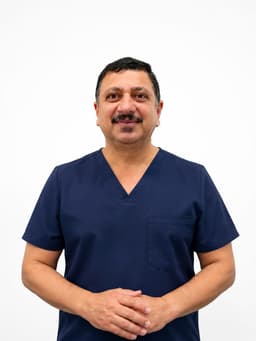
About Rajesh Verma
Registered Massage Therapist (CMTO)
Rajesh Verma is a Registered Massage Therapist at Port Credit Physio & Rehab, registered and in good standing with the College of Massage Therapists of Ontario (CMTO). He is passionate about helping patients reduce pain, improve mobility, and achieve optimal wellness through personalized massage therapy, including deep tissue massage, Swedish massage, cupping therapy, sports recovery massage, and headache relief treatment. His approach combines hands-on therapeutic technique with individualized treatment plans designed to address the root cause of pain and muscle dysfunction, so every session is effective, restorative, and tailored to the person on the table.
Frequently Asked Questions
Do I need a doctor's referral for massage therapy in Ontario?
No. You can book directly with a Registered Massage Therapist. Some extended health plans require a physician's note before they'll reimburse, so it's worth a quick call to your insurer before your first visit.
Does insurance cover massage therapy in Ontario?
Most extended health plans include an annual RMT allowance, commonly between $300 and $750 per year. Massage therapy is not covered by OHIP. We direct bill most major insurers.
How often should I get a massage?
It depends on what you're managing. For an acute problem, weekly or every two weeks until it settles. For general maintenance and stress, every four to six weeks suits most people. For athletes in a heavy training block, every two to three weeks is common. Your massage therapist will suggest a schedule after your first session rather than selling you a package up front.
How long should my appointment be?
30 minutes suits one focused area — neck and shoulders, for example. 60 minutes is the most popular and covers a full region properly. 90 minutes is best for full-body work or multiple problem areas.
Should a massage hurt?
It shouldn't be painful. Deep tissue work can feel intense, but you should be able to breathe normally through it. Pain that makes you tense up is counterproductive — say something and the pressure will be adjusted.
Is it normal to feel sore afterwards?
Yes, particularly after deep tissue or trigger point work. Mild tenderness for 24–48 hours is common. Drink water, move gently, and use heat if it helps. Sharp or worsening pain isn't normal — contact us.
Can I have massage therapy while pregnant?
Generally yes, with appropriate positioning and technique. Let us know at booking so the session is set up correctly, and check with your care provider if you have a high-risk pregnancy.
What's the difference between massage therapy and physiotherapy?
Massage therapy works on soft tissue to reduce tension and pain. Physiotherapy assesses movement and builds strength and function through exercise. They complement each other well, which is why many of our clients use both — massage makes the movement comfortable, physiotherapy makes it last.
Book Your Massage in Port Credit
Whether you're managing pain, unwinding after a heavy few months, or recovering from training, a Registered Massage Therapist is a straightforward place to start. No referral needed, and we direct bill most major insurers.
Book Your Massage