Settle the Tendon, Rebuild Your Grip
Elbow Pain, Tennis Elbow & Golfer's Elbow
Most elbow pain comes from overloaded tendons, like tennis elbow or golfer's elbow, and it responds very well to physiotherapy. At Port Credit Physio and Rehab, our Registered Physiotherapists find exactly which structure is irritated, reduce your pain, and rebuild the strength in your forearm so you can grip, lift, and play without flare-ups. Most people see real progress within weeks.
Elbow pain has a way of showing up everywhere. It can hurt to shake hands, hold a coffee, turn a doorknob, use a mouse, or swing a racquet or golf club. For many of our patients in Mississauga, it starts as a mild ache and slowly becomes something they notice all day.
Common Causes of Elbow Pain We Treat
Tennis Elbow (Lateral Elbow Tendinopathy)
Irritation of the tendons on the outside of the elbow, where the muscles that lift your wrist and fingers attach. Despite the name, most people who get it don't play tennis. Gripping, typing, using a mouse, hammering, gardening, and carrying heavy bags are common triggers. It's most common between ages 35 and 55.
Golfer's Elbow (Medial Elbow Tendinopathy)
Affects the tendons on the inside of the elbow, where the muscles that bend your wrist and grip attach. It's common in golfers, pickleball and racquet players, climbers, weightlifters, and trades workers.
Ulnar Nerve Irritation (Cubital Tunnel Syndrome)
The ulnar nerve, your "funny bone" nerve, runs along the inside of the elbow. Pressure from leaning on your elbow, or keeping it bent for long periods while sleeping or on the phone, can irritate it, causing tingling or numbness in the ring and little fingers, and sometimes hand weakness.
Radial Tunnel Syndrome
A nerve on the outside of the forearm can become irritated and cause pain that closely mimics tennis elbow. It's less common, but it's one reason a proper assessment matters when tennis elbow isn't getting better.
Biceps and Triceps Tendon Injuries
The biceps and triceps attach near the elbow and can become irritated with heavy lifting. A sudden "pop" at the front of the elbow while lifting, followed by bruising and weakness, may be a biceps tendon rupture and needs prompt medical attention.
Elbow Fractures and Dislocations
Falls onto an outstretched hand are a common cause of elbow fractures and dislocations. After weeks in a cast or sling, the elbow is often very stiff. Starting physiotherapy as soon as your doctor allows is key, because the elbow tends to lose motion quickly.
Elbow Ligament Sprains
Falls, contact sports, and repetitive throwing can strain the ligaments that stabilize the elbow, causing pain and a feeling of looseness. Rehab builds strength and control around the joint.
Elbow Bursitis
The bursa at the tip of the elbow can swell into a soft lump, often from leaning on the elbow or a direct knock. Most cases settle with protection and time. A hot, red, painful bursa with fever needs medical attention quickly, as it may be infected.
Elbow Arthritis
Less common in the elbow than in other joints, but it's more likely after a previous fracture or dislocation. Physiotherapy helps maintain motion, strength, and function.
What Are the Most Common Signs of an Elbow Injury?
Pain on the outside or inside of the elbow, sometimes spreading into the forearm
Pain when gripping, lifting, or twisting, like opening a jar or turning a key
Weak grip or dropping objects
Stiffness, or trouble fully bending or straightening the arm
Numbness or tingling in the ring and little fingers
Swelling, bruising, or a visible lump after a fall or impact
Why Is the Elbow So Prone to Overuse Injuries?
Your elbow is where most of your forearm muscles attach. Every time you grip, type, lift, or twist your wrist, those muscles pull on small tendon attachments at the outside and inside of the elbow.
Those attachment points are small, so repeated gripping concentrates a lot of force in a tiny area. When the load builds faster than the tendon can adapt, from a new sport, a busy week at work, or long hours at a computer, the tendon becomes irritated. That's why most elbow pain is an overuse problem rather than a single injury.
How Physiotherapy Helps Elbow Pain
A thorough assessment
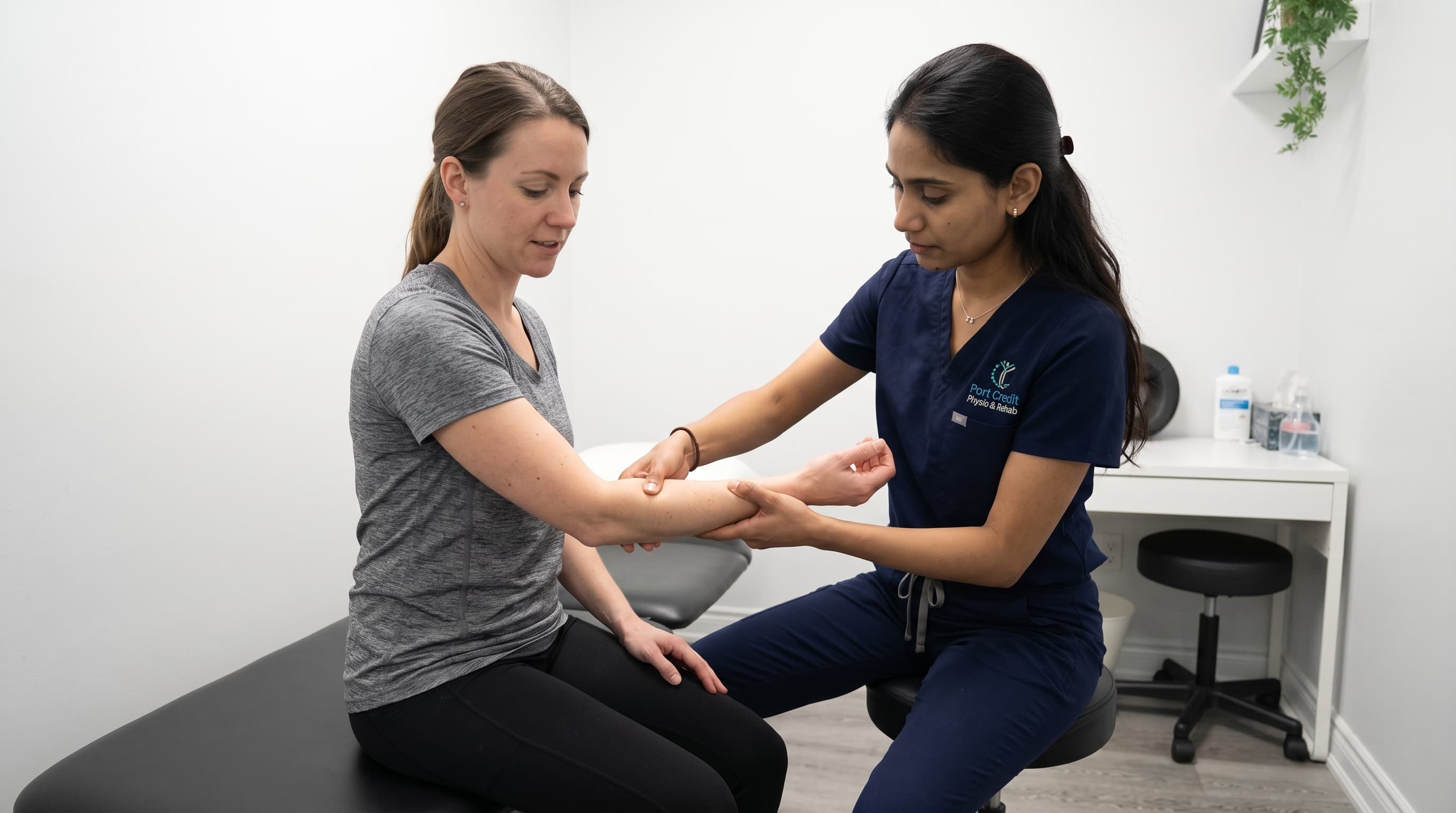
Your Registered Physiotherapist will test your grip strength, elbow and wrist movement, and the specific tendons and nerves involved. We'll also check your neck, since a pinched nerve there can send pain to the elbow.
Pain relief and load management
Early treatment may include hands-on manual therapy, practical changes to the activities that aggravate your elbow, a counterforce brace if it helps, and modalities like shockwave therapy or acupuncture and dry needling for stubborn cases. The goal is to settle the tendon without stopping all activity.
Progressive strengthening
Tendons get better by getting stronger. Your program will gradually load the forearm, wrist, and grip muscles, along with your shoulder, which shares the work in gripping and lifting.
Technique and workstation changes
We'll look at your mouse and keyboard setup, tool grip, racquet or club technique, and lifting form, and suggest changes that reduce strain.
Return to work and sport
The final stage prepares your elbow for the specific demands of your job, your racquet or golf swing, or your gym program.
Many patients also benefit from Registered Massage Therapy for tight forearm, neck, and shoulder muscles that often accompany elbow pain.
When to Seek Urgent Care
Call 911 or go to the emergency department if:
- Arm pain comes with chest pressure, shortness of breath, sweating, or nausea, which can be signs of a heart attack
- Your elbow looks deformed after a fall, or you can't bend or straighten it
- Your elbow is hot, red, and swollen and you have a fever
See your doctor within a few days if:
- You feel a sudden pop at the front of your elbow with bruising and weakness, as a biceps tendon rupture is best repaired early
- You have numbness or weakness in your hand that's getting worse
Common Questions About Elbow Pain, Tennis Elbow & Golfer's Elbow Treatment
What causes elbow pain?
Most elbow pain is caused by overuse of the forearm muscles and tendons, as in tennis elbow and golfer's elbow. Other causes include nerve irritation, fractures, ligament sprains, bursitis, and arthritis. Repetitive gripping, lifting, computer work, and racquet sports are the most common triggers.
Can a physiotherapist help with elbow pain?
Yes. Physiotherapy is one of the most effective treatments for tennis elbow, golfer's elbow, and elbow stiffness after injury. A physiotherapist identifies the cause, reduces pain, and builds the strength your elbow needs to handle daily demands again.
How do you rehab elbow pain?
Rehab usually starts by reducing aggravating activities and settling pain, then moves to gradual strengthening of the forearm, grip, and shoulder. The final stage trains the specific movements you need for work, sport, or the gym. Most tendon problems need consistent exercise over several weeks to months.
Are there home exercises I can do for elbow pain?
Yes. Common starting exercises include wrist holds against light resistance, slow wrist lifting and lowering with a light dumbbell, grip strengthening, and forearm rotation with a hammer. The right exercises and load depend on your condition, so it's best to have a physiotherapist set your starting point.
Is it okay to lift weights with tennis elbow?
Usually, yes, with some changes. Use neutral grips (palms facing each other) where possible, reduce heavy palm-down gripping, and consider lifting straps for pulling exercises. Mild discomfort that settles by the next day is generally fine, but pain that's worse the next morning means you need to reduce the load.
How long does tennis elbow take to heal?
With the right rehab, many people notice improvement within 6 to 12 weeks, though full recovery can take several months.
Should I wear a tennis elbow brace?
A counterforce brace, worn just below the elbow, can reduce pain during aggravating activities for some people. It works best alongside a strengthening program rather than as a treatment on its own.
Should I rest my elbow completely?
Complete rest usually isn't the answer for tendon pain. Tendons need gradual loading to get stronger. The goal is to reduce the activities that flare your pain while keeping the arm active with the right exercises.
Can using a computer mouse cause elbow pain?
Yes. Long hours gripping a mouse with the wrist bent upward can overload the tendons on the outside of the elbow. A better workstation setup, a vertical mouse, and regular breaks can make a real difference.
Do cortisone injections help tennis elbow?
Cortisone injections may reduce pain in the short term. However, research suggests they may be linked to slower recovery or more recurrence over the long term for tennis elbow. Discuss the pros and cons with your doctor.
Related Services
Physiotherapy
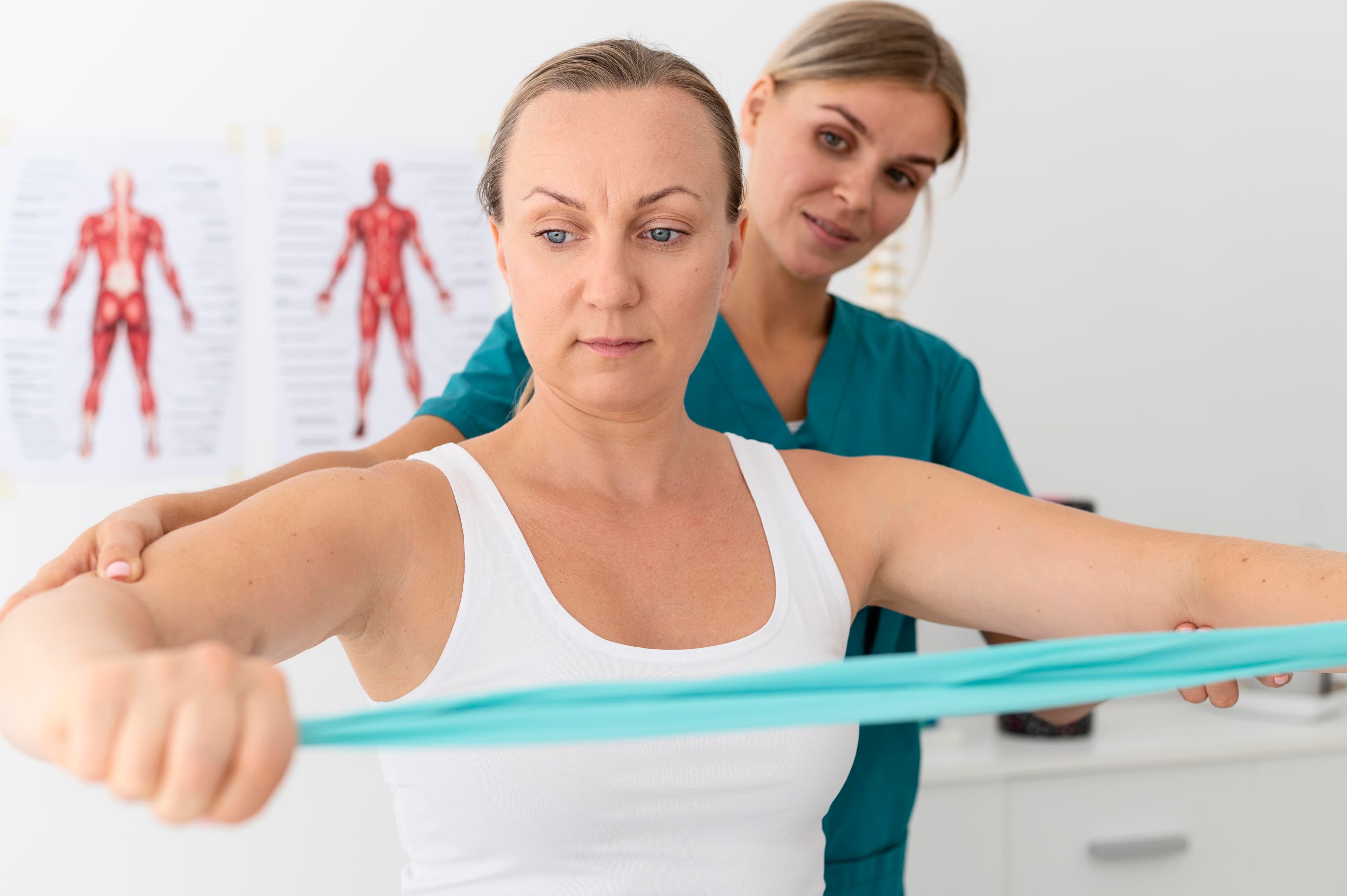
Evidence-based physiotherapy in Port Credit, Mississauga. McKenzie Method® & Graston Technique® for back pain, sciatica, and sports injuries.
Massage Therapy (RMT)
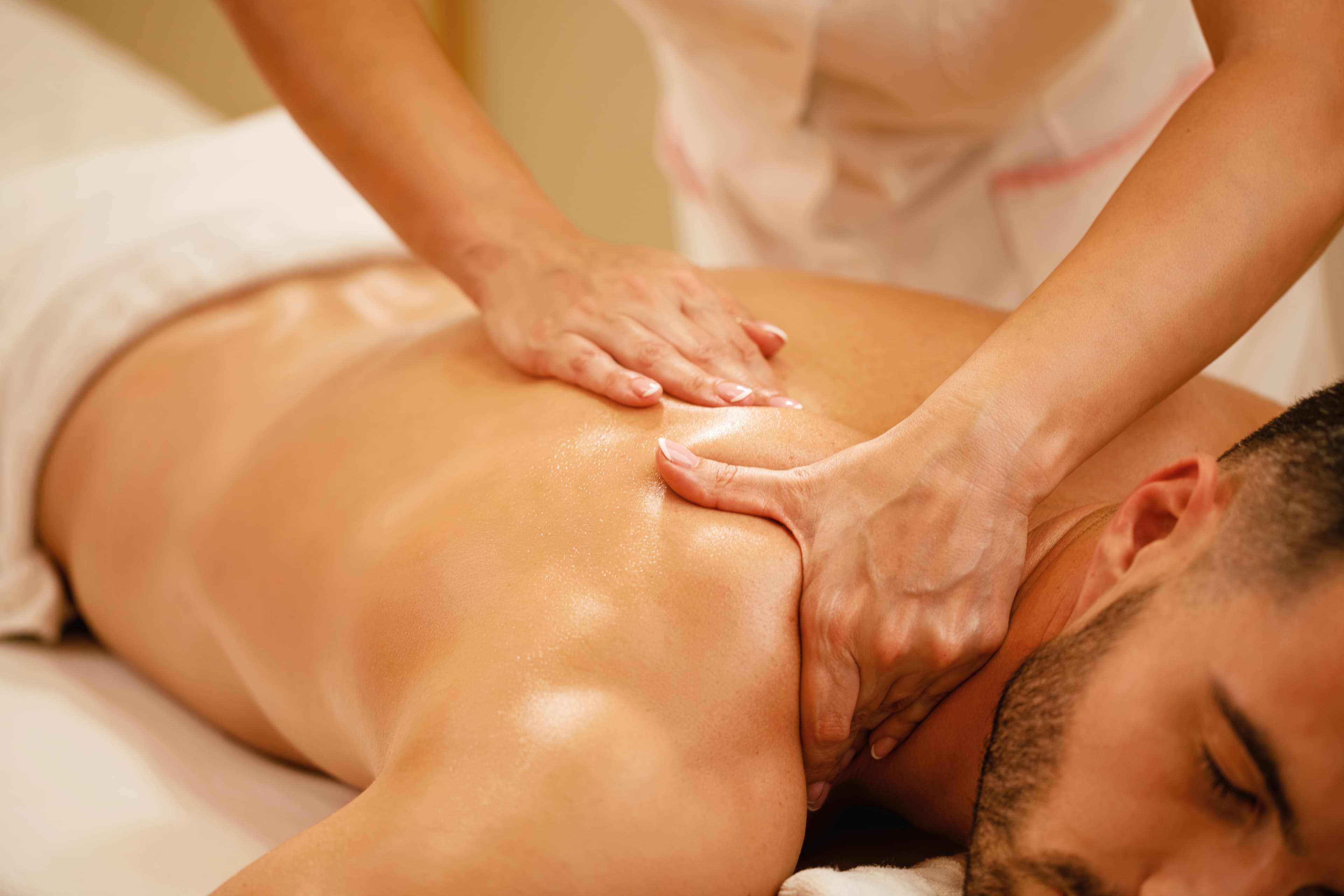
Restore Balance, Ease Tension, Reclaim Your Life
Shockwave Therapy
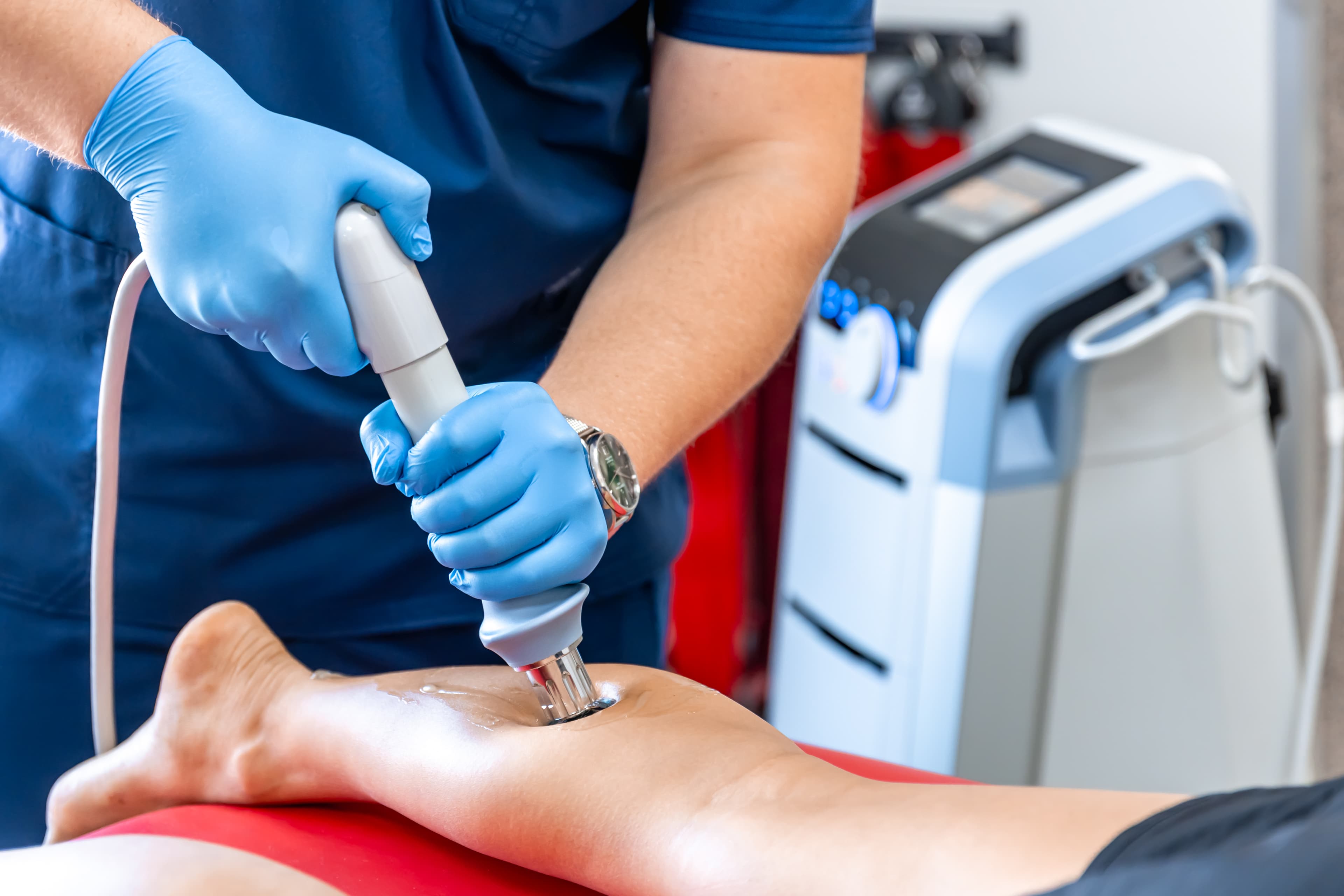
Shockwave therapy (ESWT) for plantar fasciitis, tendinitis, tennis elbow, and calcific shoulder pain. Non-invasive. Open 7 days.
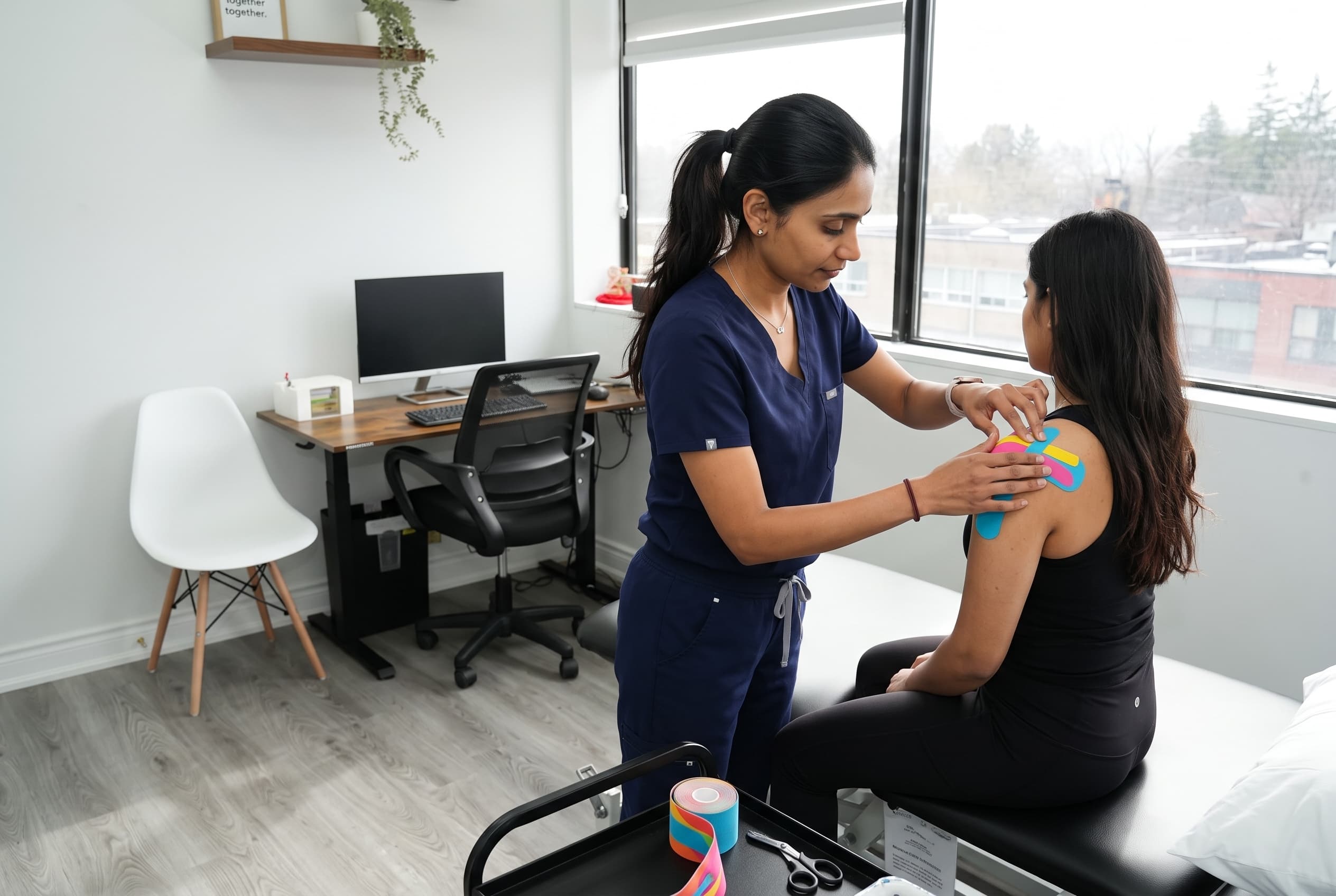
Kinesio Taping
Kinesiology taping to support muscles and joints and ease pain while you stay active, as part of a complete physio plan.
Related Conditions
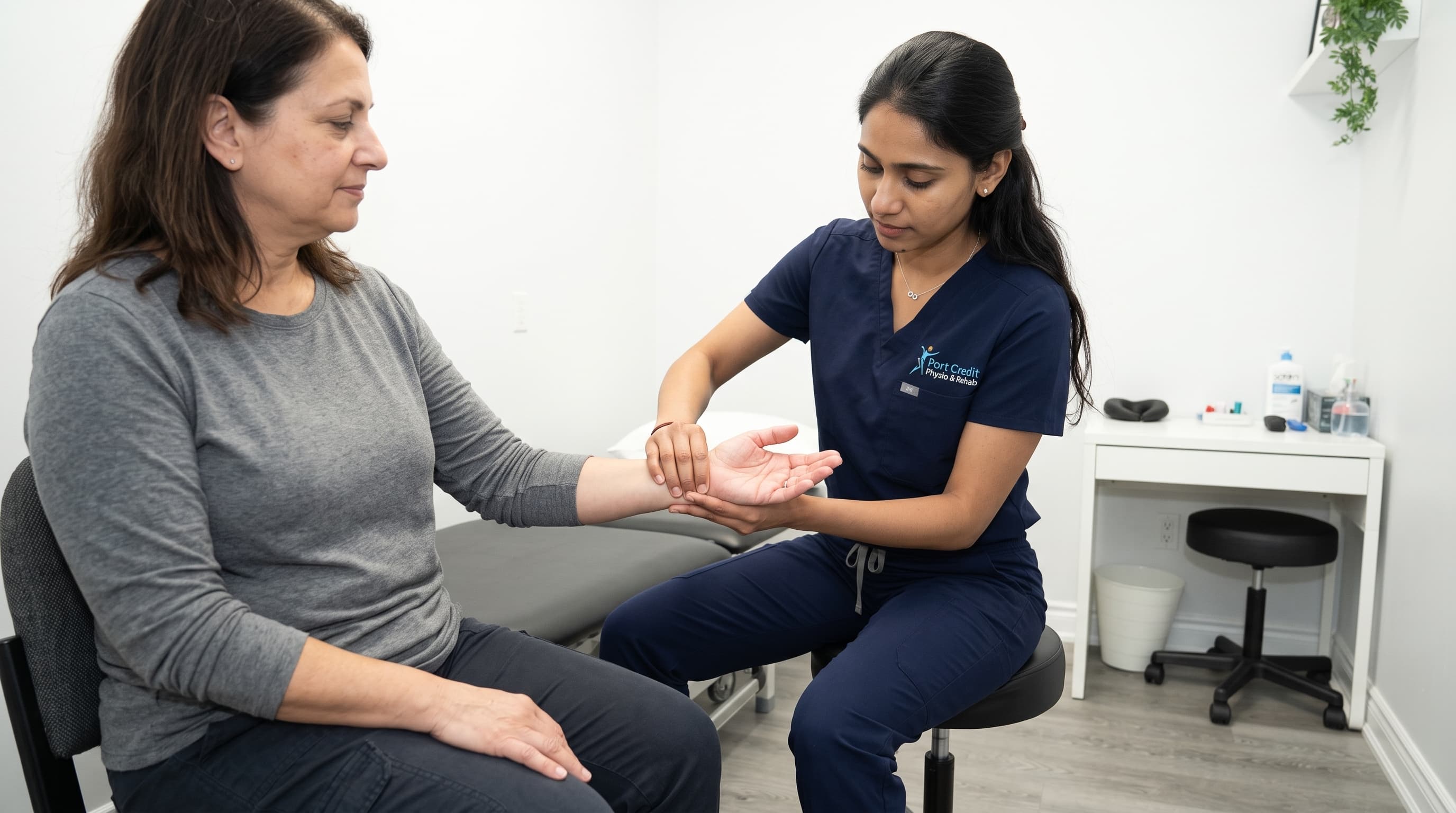
Hand & Wrist Pain
Hand or wrist pain from arthritis, carpal tunnel, trigger finger or mommy thumb? Our Port Credit physiotherapists can help. Book in Mississauga.
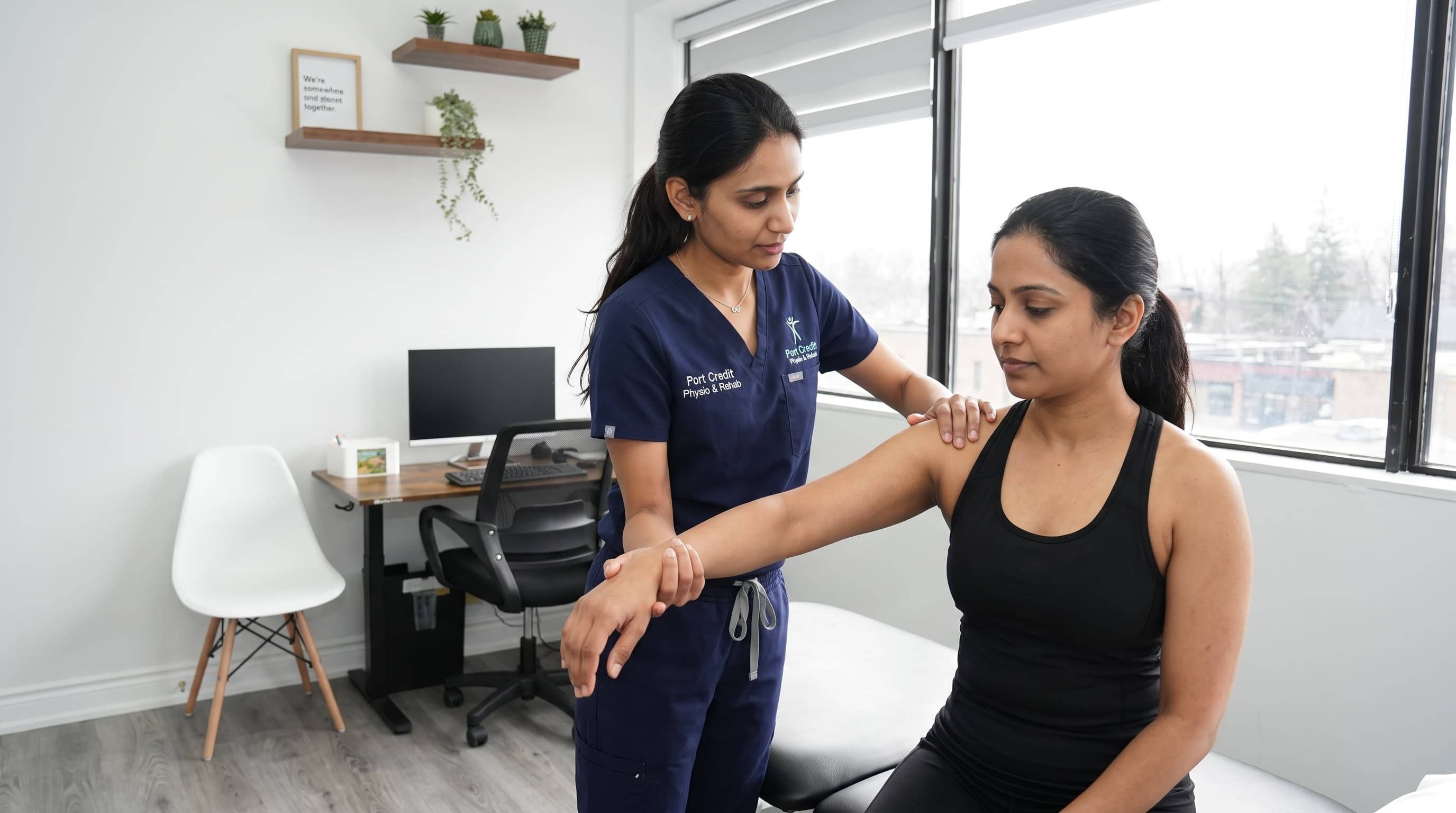
Shoulder Pain & Rotator Cuff Tears
Shoulder pain or a torn rotator cuff? Our Port Credit physiotherapists in Mississauga find the cause and build a plan to restore strength. Book today.
Book Elbow Pain Physiotherapy in Port Credit
Don't let elbow pain affect your work, workouts, or weekend game. No doctor's referral is needed, and we offer direct billing to most major insurers.