Break Through Chronic Pain
Shockwave Therapy
Some injuries just won't heal. You've rested, stretched, maybe tried injections, and the pain keeps coming back. When a chronic injury has "stalled," shockwave therapy can help restart the healing process. Extracorporeal Shockwave Therapy (ESWT) is a non-invasive treatment that uses acoustic waves to jumpstart healing in stubborn, long-standing injuries. Despite the name, there are no electric shocks, just high-energy sound waves that wake up your body's natural healing response. At Port Credit Physio & Rehab, our physiotherapists combine shockwave therapy with targeted exercise and hands-on care to help you move from pain to performance. No needles, no medication, and no surgery: treatment is done right in the clinic, and most people return to their normal daily activities the same day.
How Shockwave Therapy Works
Shockwave therapy delivers pulses of acoustic energy through the skin into injured tendons, muscles, and soft tissue. It's most effective for chronic conditions, usually those lasting longer than three months. It is thought to:
Stimulate a healing response — creates controlled micro-trauma in damaged tissue, prompting your body to repair it
Increase blood flow — triggers improved circulation and nutrient delivery to areas that heal slowly, like tendons
Break down scar tissue and calcification — helps loosen restrictions and calcium deposits in tendons
Reduce chronic pain — is thought to overstimulate pain-signalling nerve endings, decreasing pain over time
Conditions We Treat With Shockwave
Plantar Fasciitis (Stubborn Heel Pain)
Pain under the heel, often sharpest with the first steps in the morning or after sitting. Shockwave is one of the most researched treatments for chronic plantar fasciitis, part of our ankle & foot pain care.
Achilles Tendinitis
Pain and stiffness at the back of the heel or lower calf, common in runners and active adults. See our ankle & foot pain condition page.
Tennis Elbow & Golfer's Elbow
Chronic tendon pain on the outside or inside of the elbow from repetitive gripping, lifting, or racquet sports. See our elbow pain condition page.
Patellar Tendinitis ("Jumper's Knee")
Pain just below the kneecap, common in sports involving jumping, running, and quick changes of direction. See our knee pain condition page.
Calcific Tendonitis (Shoulder)
Calcium deposits in the rotator cuff tendons that cause shoulder pain and limited movement. Shockwave can help break down these deposits. See our shoulder pain condition page.
Greater Trochanteric Pain Syndrome (Hip)
Pain on the outside of the hip, often worse when lying on that side, climbing stairs, or walking. See our hip pain condition page.
Signs You May Benefit From Shockwave Therapy
Pain that has lasted more than three months
An injury that hasn't improved with rest, stretching, or other treatments
Heel pain that's worst with your first steps in the morning
Tendon pain that flares up every time you return to activity
You want to explore non-invasive options before considering injections or surgery
What to Expect From Treatment
Before Treatment
Your physiotherapist will assess your injury to confirm shockwave is right for you and check for any reasons it may not be safe.
During Treatment
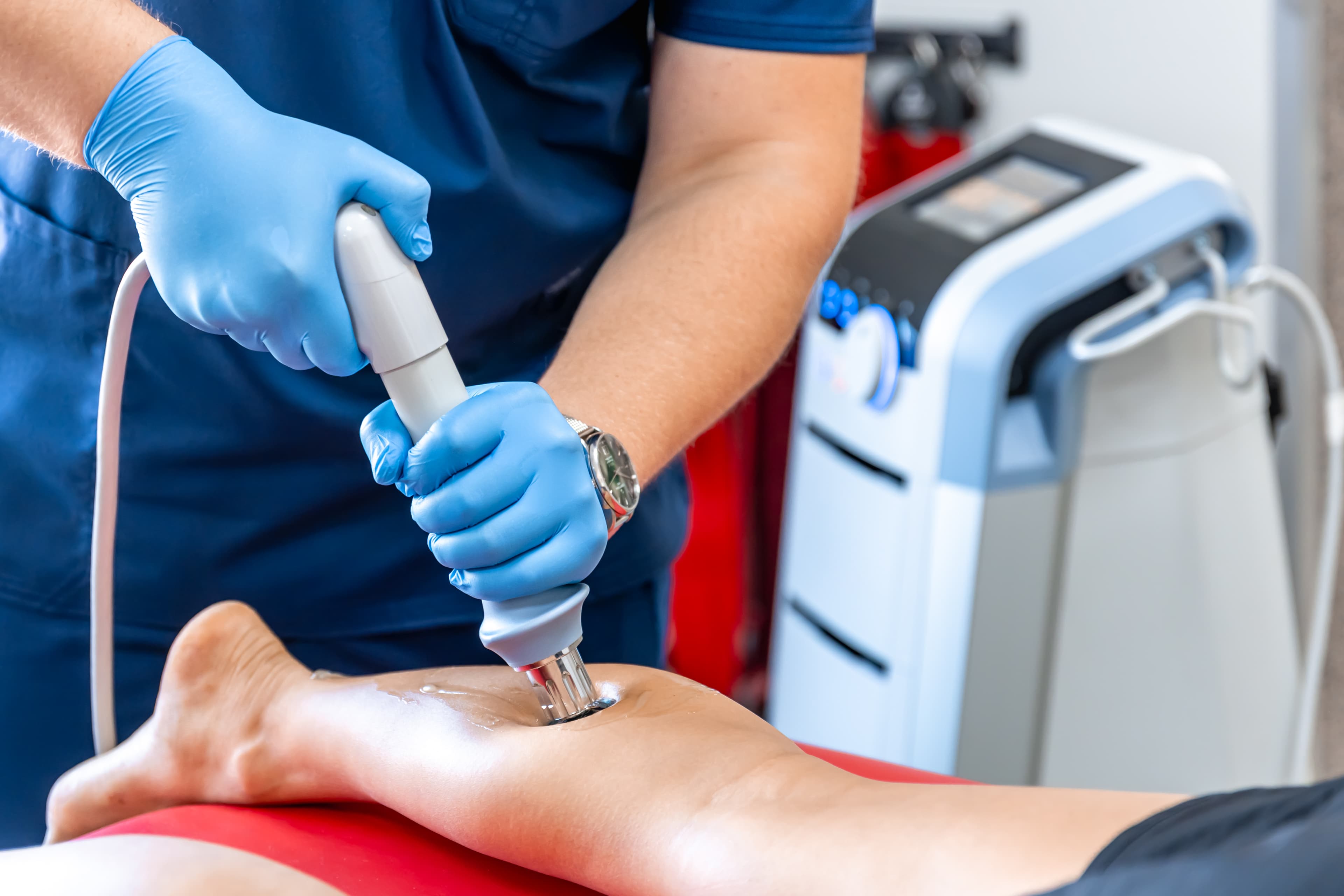
A gel is applied to the skin, and the shockwave applicator is moved over the injured area. Each session takes about 10–15 minutes. You'll feel a strong tapping or pulsing sensation, adjusted to your comfort.
After Treatment
You may feel some soreness or tenderness for a day or two. This is a normal part of the healing response. Your physiotherapist will advise you on activity levels between sessions.
Treatment Plan
Most people need 3–6 sessions, spaced 5–10 days apart. Results continue to improve over 6–12 weeks as the tissue heals.
Who Shouldn't Have Shockwave Therapy?
Shockwave therapy isn't suitable for everyone. It's generally not recommended if you:
- Are pregnant
- Have a bleeding disorder or take blood-thinning medication
- Have cancer, infection, or an open wound in the treatment area
- Recently had a cortisone injection in the area
- Have a pacemaker or other implanted device near the treatment area
Why Choose Port Credit Physio & Rehab
Thorough assessment to make sure shockwave is the right treatment for you
Combined approach: shockwave plus exercise and hands-on care for longer-lasting results
Delivered by registered physiotherapists
Open 7 days a week, weekdays 10 AM–8 PM, Saturdays 10 AM–4 PM, and Sundays 10 AM–2 PM
No referral needed — book directly with a registered physiotherapist
Direct billing to most major insurers, so you often won't pay out of pocket
Conveniently located on Lakeshore Road East in Port Credit, serving Mineola, Lorne Park, Lakeview, Clarkson, and all of Mississauga
Physician referrals welcome, though never required
Shockwave Therapy FAQs
Does shockwave therapy hurt?
Treatment can feel uncomfortable, often described as a strong tapping sensation, but it's usually well tolerated. Your physiotherapist adjusts the intensity to your comfort level, and sessions are short.
How many shockwave sessions will I need?
Most patients need 3–6 sessions, spaced 5–10 days apart.
How long until I see results?
Some people notice less pain after the first few sessions, but the main improvement happens over 6–12 weeks as your tissue heals.
Is shockwave therapy the same as electrical stimulation?
No. Despite the name, shockwave therapy uses acoustic (sound) waves, not electricity.
Is shockwave therapy covered by insurance?
Coverage varies by plan. When shockwave is delivered as part of physiotherapy treatment, it may be covered under your physiotherapy benefits. Check with your insurance provider.
Can shockwave therapy help me avoid surgery?
For many chronic tendon and soft-tissue conditions, shockwave is used as a non-invasive option before considering injections or surgery. Your physiotherapist will discuss whether it's a good fit for your condition.
Do I need a referral?
No. You can book directly with Port Credit Physio & Rehab.
Related Services

Physiotherapy
Evidence-based physiotherapy in Port Credit, Mississauga. McKenzie Method® & Graston Technique® for back pain, sciatica, and sports injuries.
Sports Injury Rehabilitation
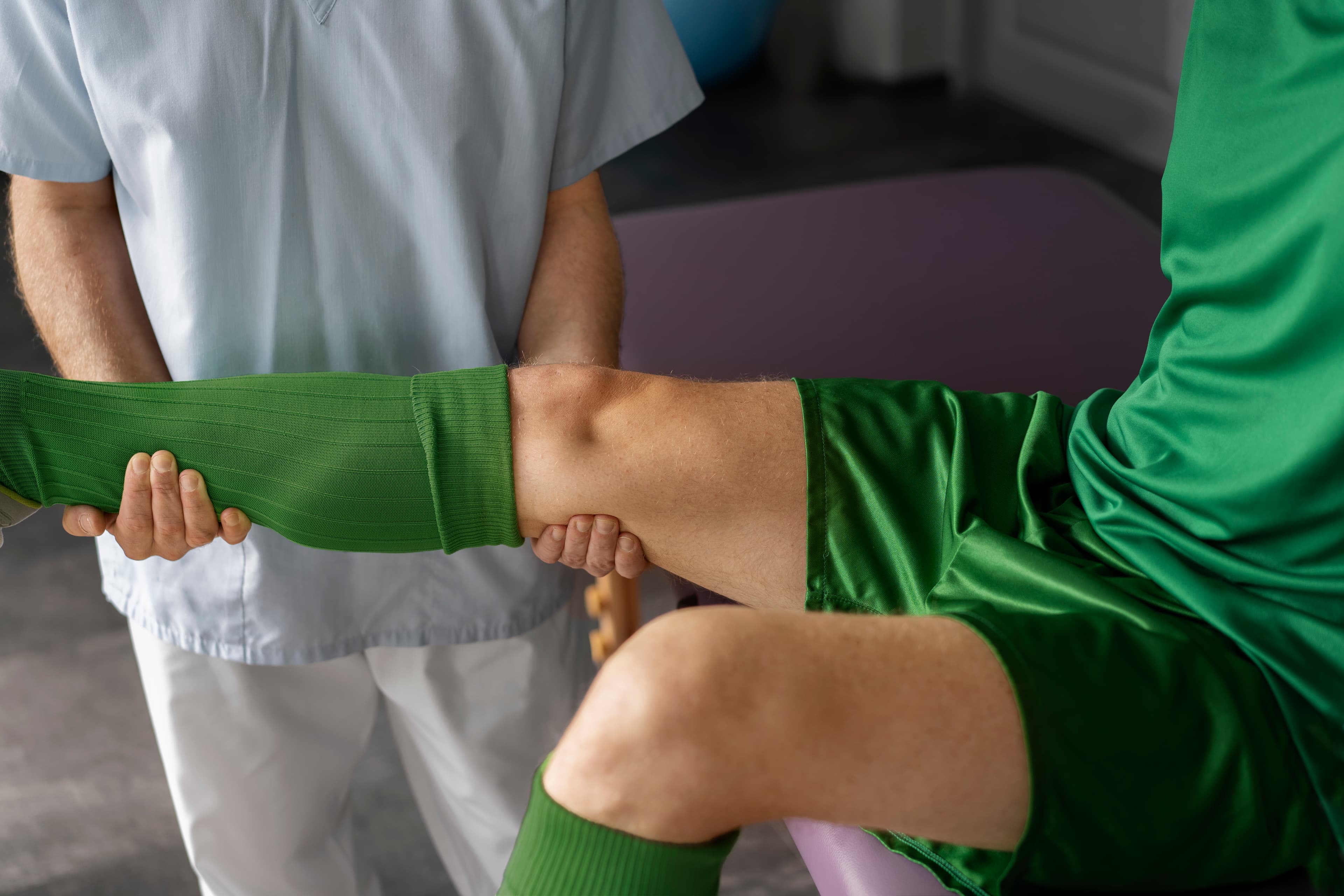
Sports injury rehabilitation in Port Credit, Mississauga. Treatment for sprains, tendonitis, muscle tears & shin splints.
Related Reading
September 26, 2026
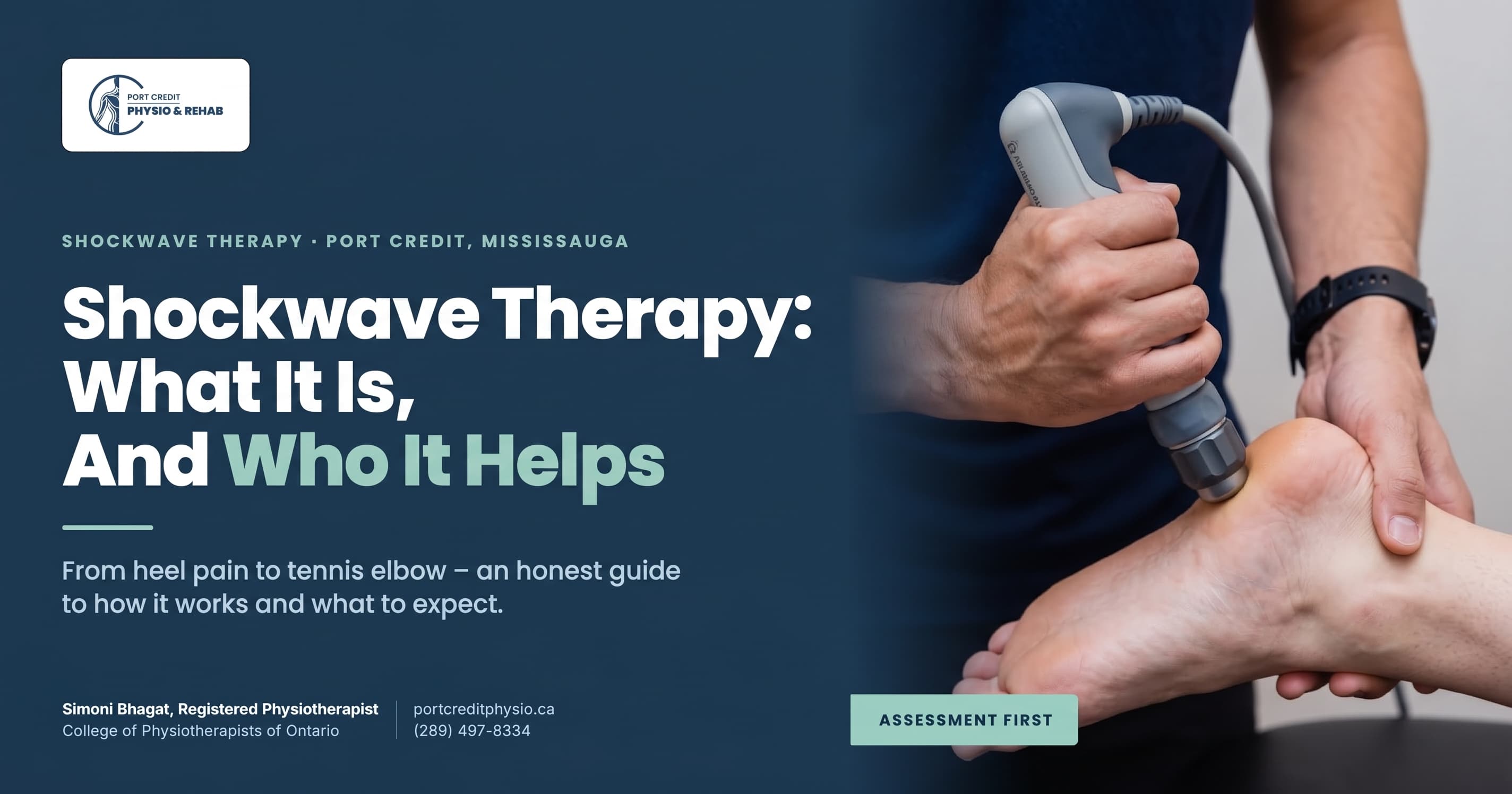
Shockwave Therapy in Port Credit & Mississauga: What It Is and Who It Helps
Considering shockwave therapy for heel pain, tennis elbow, or a stubborn tendon injury? A Port Credit physiotherapist explains how ESWT works, what the research actually says, and what your appointment looks like.
August 30, 2026
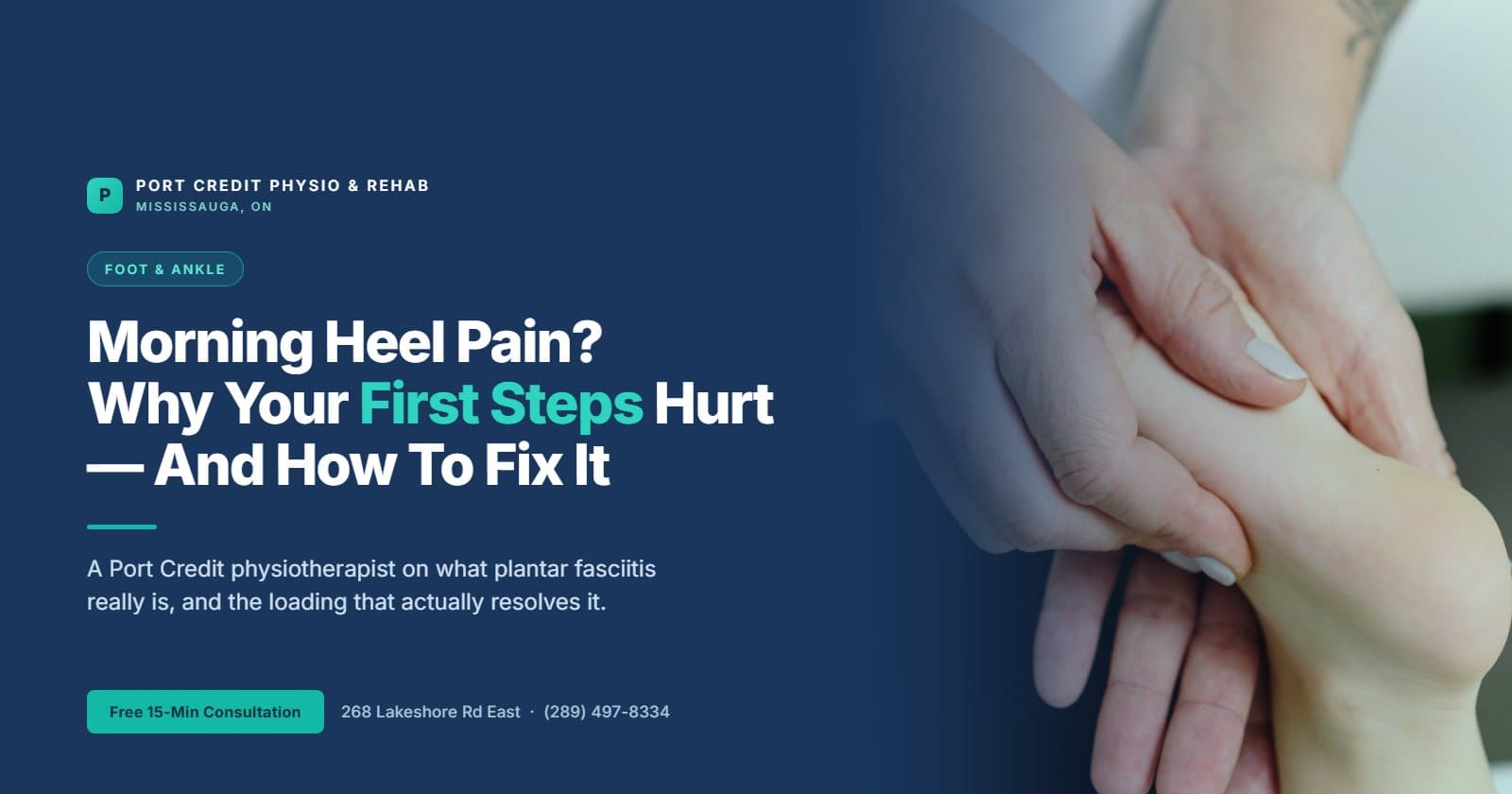
Morning Heel Pain? Why Your First Steps Hurt — and How to Fix It
Sharp heel pain on your first steps? A Port Credit physiotherapist explains why plantar fasciitis hurts most in the morning, the myths that keep people in pain, and the 5 exercises that fix it.
Ready to Get Unstuck?
If a chronic injury has stalled your recovery, shockwave therapy may be the next step. Book your assessment today.