Rebuild the Strength and Balance Your Ankle Needs
Ankle & Foot Pain
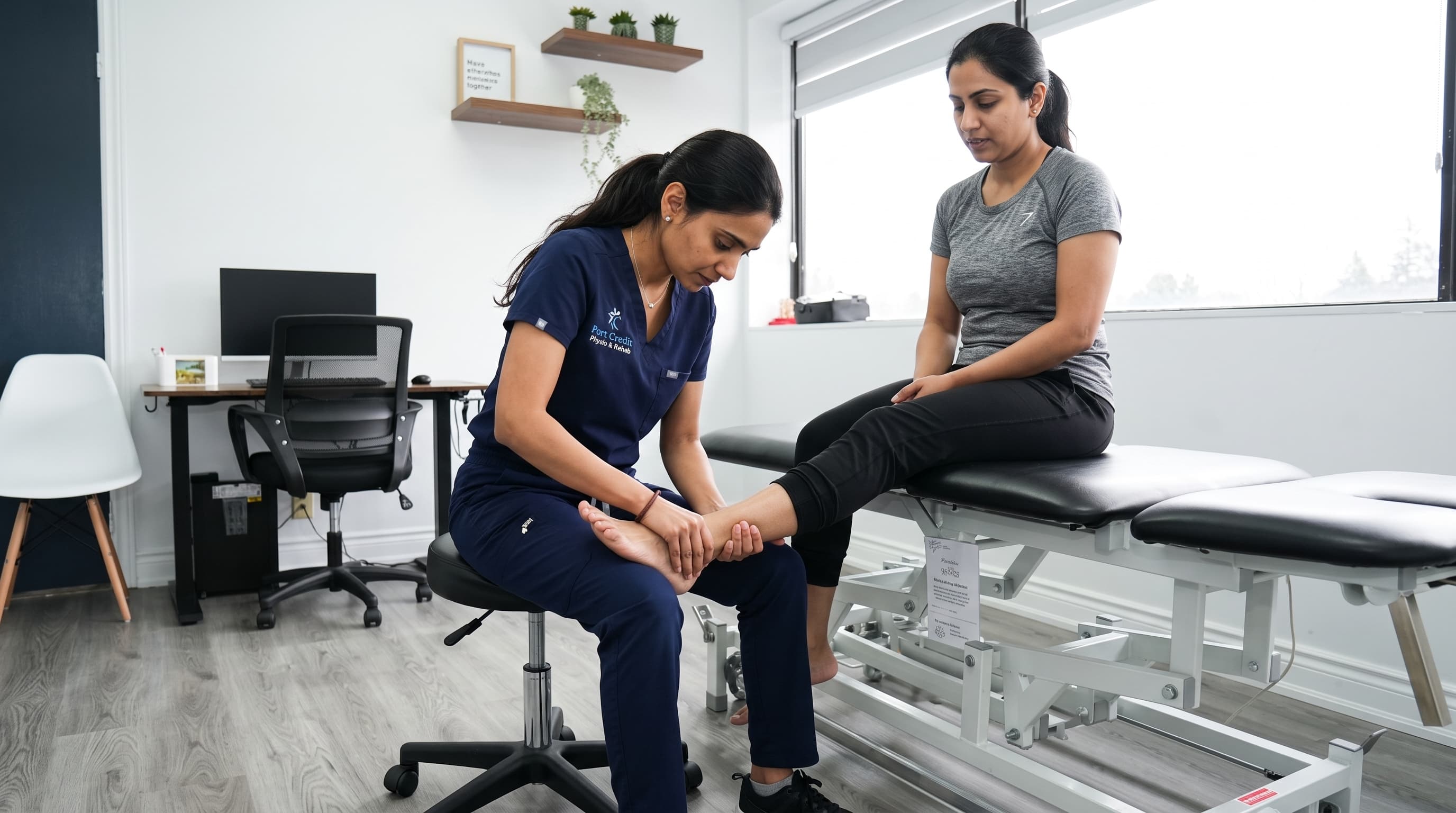
Ankle and foot pain can affect every step you take. It can make walking, running, standing at work, or even getting out of bed in the morning painful. Whether your pain started with a rolled ankle, built up gradually from running, or is part of recovery after a fracture or surgery, the right rehabilitation plan is key. Many ankle injuries that aren't fully rehabilitated tend to come back. At Port Credit Physio & Rehab, we treat the cause of your pain and rebuild the strength, balance, and control your ankle needs to stay healthy.
Common Ankle & Foot Conditions We Treat
Ankle Sprains
Stretching or tearing of the ankle ligaments, most often on the outside of the ankle after rolling it on uneven ground, stepping off a curb, or landing awkwardly in sport.
Chronic Ankle Instability
Repeated sprains and a feeling that your ankle "gives way." This often develops when a first sprain isn't fully rehabilitated, leaving the ankle with reduced strength and balance control.
High Ankle Sprains
Injury to the ligaments connecting the two lower leg bones above the ankle, common in contact and pivoting sports. These typically take longer to recover than a standard sprain.
Achilles Tendinopathy
Pain and stiffness in the tendon at the back of the heel, often worse first thing in the morning or at the start of a run. It is commonly linked to sudden increases in running, jumping, or hill training.
Plantar Fasciitis (Plantar Heel Pain)
Sharp pain under the heel, especially with the first steps in the morning or after sitting, caused by overload of the thick band of tissue along the sole of the foot. Read our full guide to plantar fasciitis.
Stress Fractures
Small cracks in the bone from repetitive loading, common in runners and people who suddenly increase their activity. These may not show up on early X-rays.
Ankle Fractures & Post-Surgical Rehab
Recovery after a broken ankle, whether treated in a cast, boot, or with surgery, to restore movement, strength, and normal walking. See our pre- and post-surgical physiotherapy page.
Achilles Tendon Rupture Rehab
Structured rehabilitation after surgical or non-surgical management of a torn Achilles tendon.
Peroneal & Posterior Tibial Tendinopathy
Overload of the tendons on the outside or inside of the ankle, often linked to foot posture, running, or a previous sprain.
Ankle & Foot Arthritis
Stiffness, swelling, and pain with walking, often following an old injury or fracture.
Morton's Neuroma
Burning, tingling, or a "pebble in the shoe" feeling between the toes, often worsened by tight or narrow footwear and high heels.
Bunions & Post-Bunion Surgery Rehab
Managing big toe pain and restoring walking and toe movement after surgery.
Shin Splints (Medial Tibial Stress Syndrome)
Aching along the inside of the shin with running or impact activity. Learn more about running-related shin, knee & heel pain.
Signs You Should Seek Physiotherapy
Pain, swelling, or bruising after rolling or twisting your ankle
Your ankle feels weak, unstable, or keeps giving way
Heel or arch pain with your first steps in the morning
Pain or stiffness at the back of the heel or ankle
Pain that increases with walking, running, or standing for long periods
Difficulty with stairs, uneven ground, or balancing on one leg
Burning, tingling, or numbness in the foot or toes
Limping or changing the way you walk to avoid pain
How Our Physiotherapy Care Helps
Research shows that exercise-based rehabilitation, particularly balance and strength training, significantly reduces the risk of repeat ankle sprains and is the foundation for treating tendon and heel pain. Our programs are built on that evidence and customized to your goals.
Thorough Assessment
We assess your ankle, foot, knee, and hip, along with your walking pattern, balance, and footwear, to find what's driving your pain. We also screen whether your pain may be referred from the lower back.
Early Injury Management
Guidance on protecting the injury, managing swelling, and gradually loading the ankle, so you recover faster than with rest alone.
Manual Therapy & Joint Mobilizations
Hands-on techniques, including mobilizations with movement using a belt, to restore ankle movement, especially the ability to bend the ankle forward, which is often lost after a sprain.
Soft Tissue Release & Assisted Stretching
For tight calves, Achilles, arch, and surrounding muscles. See our myofascial release therapy page.
Progressive Strengthening
Targeted calf, Achilles, foot, and hip strengthening. For tendon and heel pain, we use evidence-based loading programs that gradually build tissue capacity.
Balance & Proprioception Training
Retraining your ankle's ability to sense position and react quickly, which is essential for preventing repeat sprains.
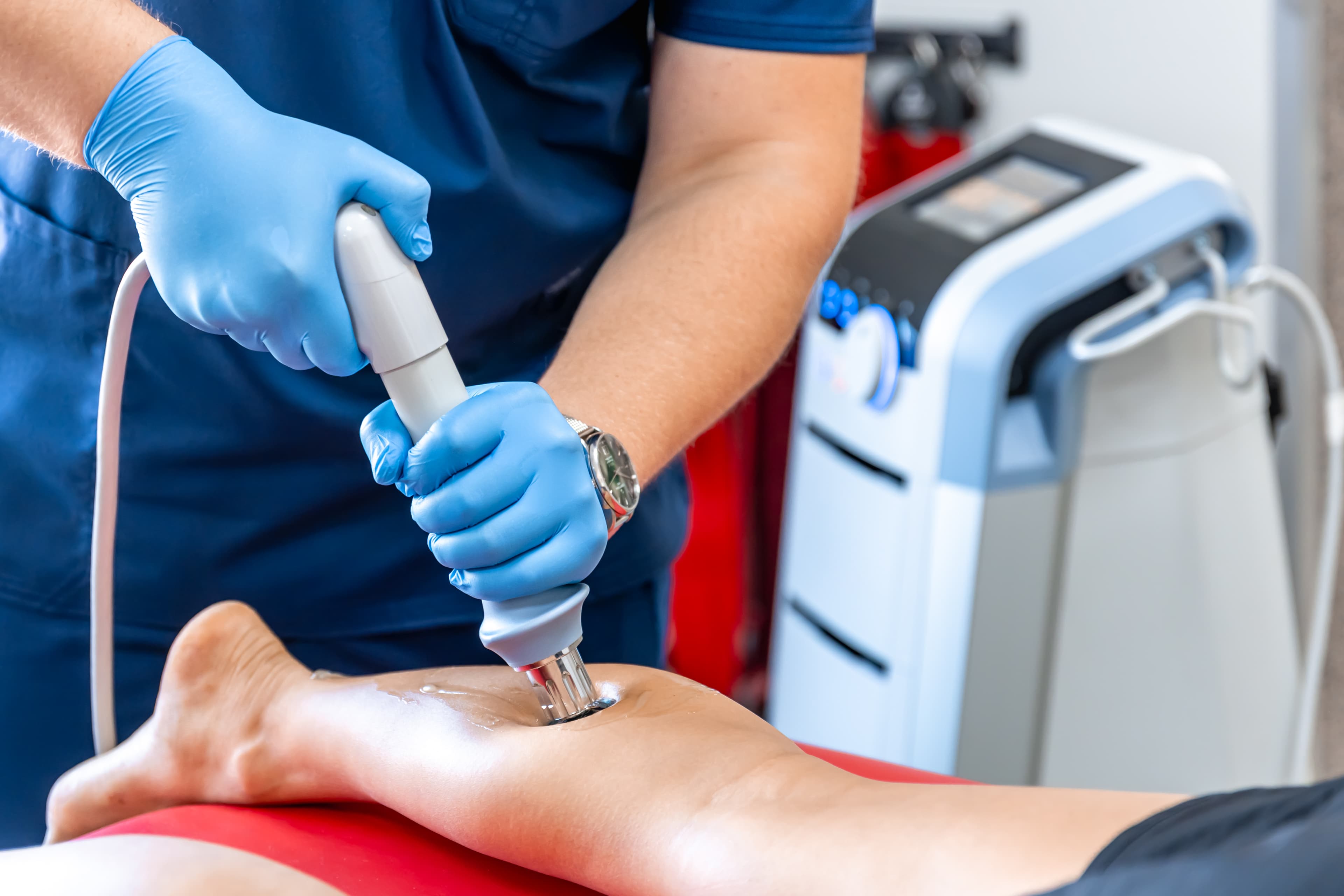
Shockwave Therapy
An evidence-supported option for persistent plantar heel pain and Achilles tendinopathy that hasn't settled with exercise alone. See our shockwave therapy page.
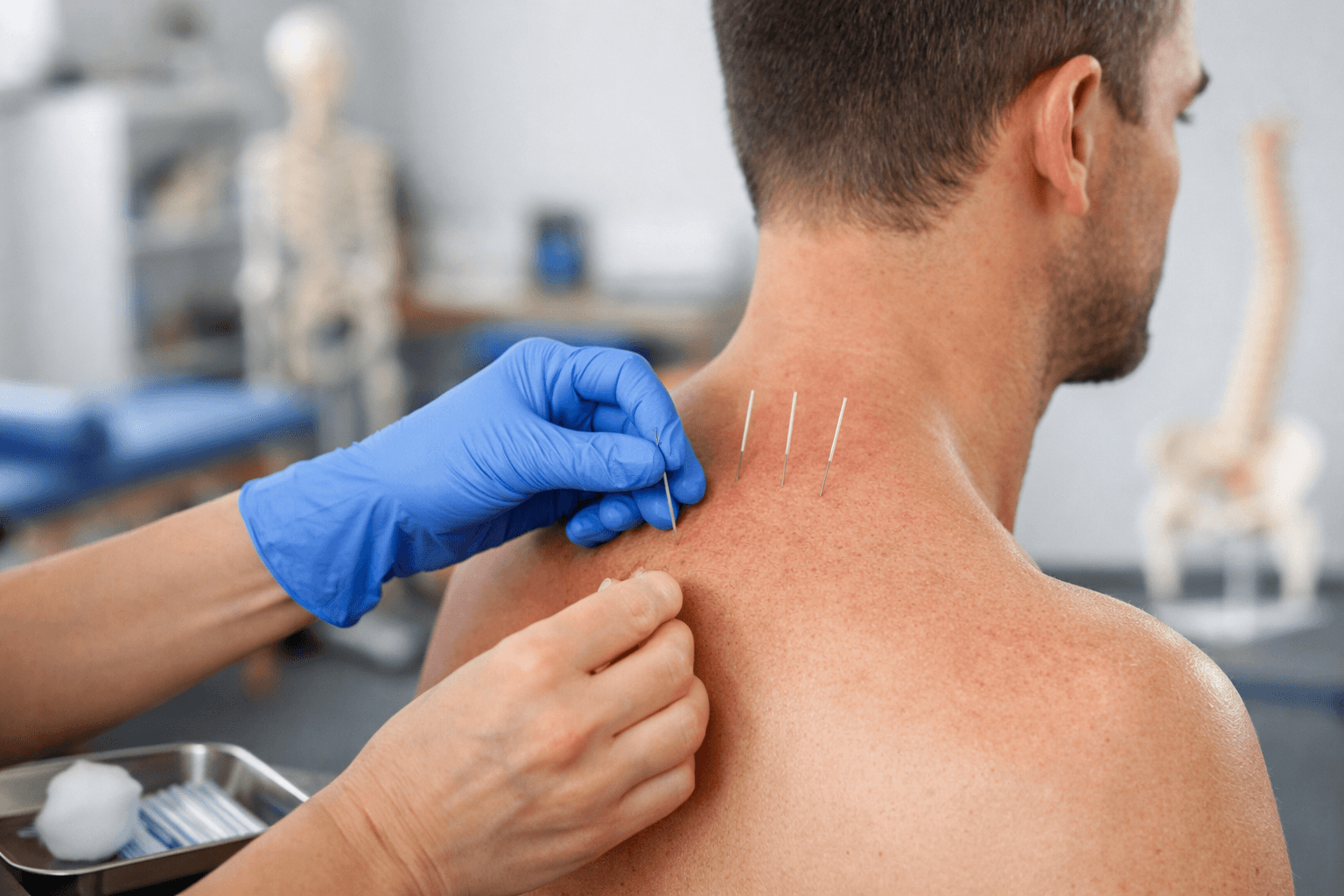
Acupuncture, Dry Needling & Cupping
To reduce pain and release tight, sensitive calf and foot muscles. See our acupuncture & dry needling page.
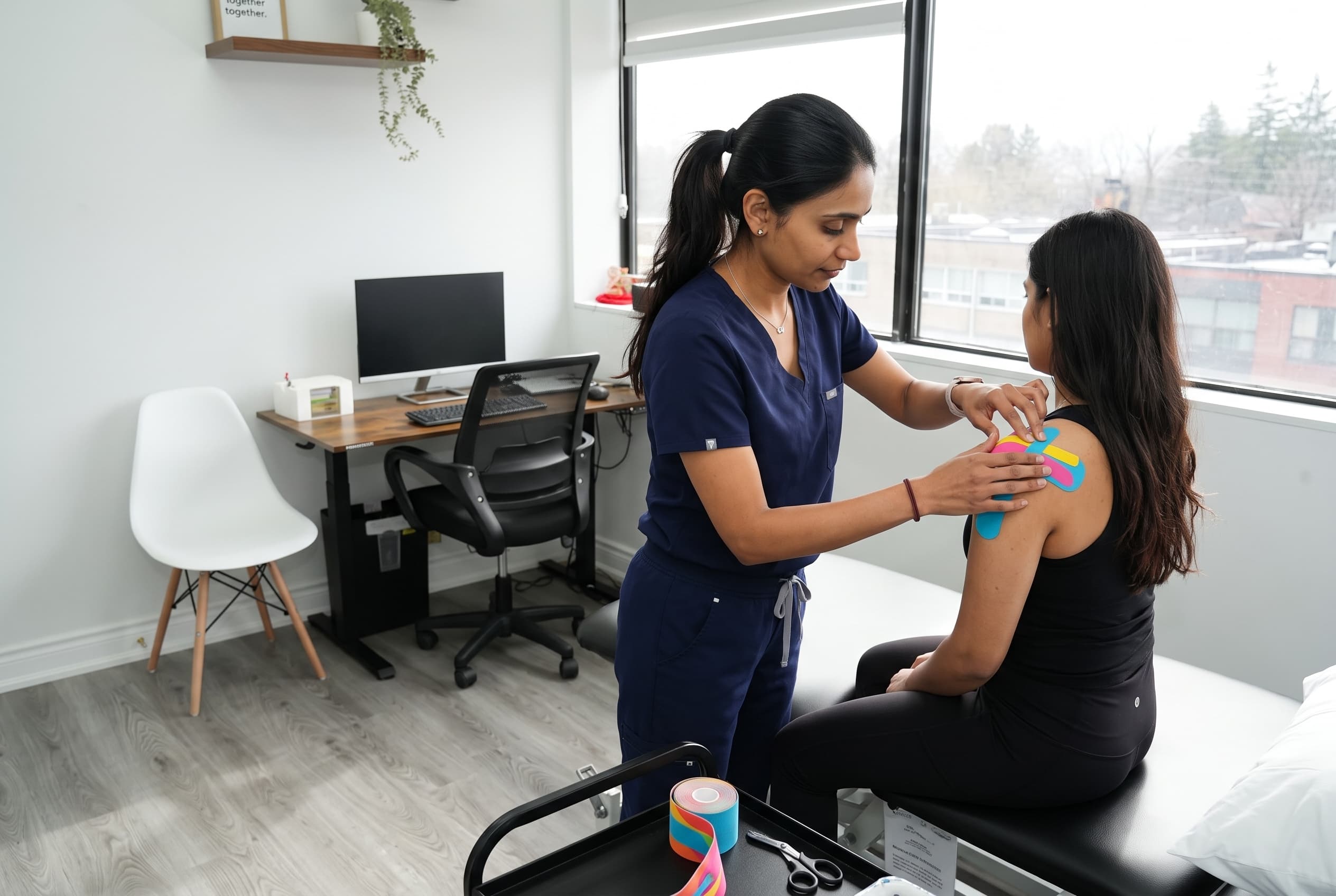
Kinesio & Athletic Taping
To support the ankle and reduce pain as you return to activity. See our kinesio taping page.
Ultrasound, IFC & TENS
Used alongside active treatment for short-term pain relief.
Footwear & Orthotic Guidance
Advice on supportive footwear and whether orthotics may help your foot posture.
Pre- & Post-Surgical Rehabilitation
Structured programs after ankle fractures, ligament repairs, Achilles repairs, and bunion surgery, aligned with your surgeon's protocol.
Functional, Sports & Return-to-Run Training
We take you beyond pain relief and back to the activities you love:
Treadmill Walking & Running Assessment
We analyze how your foot and ankle move with each step to identify what's overloading them, then build a graded return-to-run plan.
Stair Training
Rebuilding strength, control, and confidence on stairs, especially after fractures or surgery.
Agility & Plyometric Drills
Hopping, landing, cutting, and change-of-direction training to prepare your ankle for sport.
Balance & Stability Workouts
Progressive single-leg and unstable surface training to build lasting ankle resilience.
Return-to-Sport Testing
Strength, hop, and balance testing to guide safe return decisions and reduce the risk of re-injury.
Not Sure Where to Start?
We offer a free 15-minute consultation for anyone unsure whether physiotherapy is right for their ankle or foot pain. Talk with our physiotherapist, ask your questions, and get a clear next step with no obligation.
Book Your Free ConsultationWhen to Seek Urgent Medical Care
See a doctor or go to the emergency department if:
- You cannot take four steps after an injury
- There is obvious deformity or bone tenderness
- You felt a sudden "kick" or snap at the back of your heel
- The joint is hot, red, and very swollen
- You develop calf pain and swelling
See your doctor promptly if:
- You have diabetes and notice a wound, colour change, or loss of feeling in your foot
Common Questions About Ankle & Foot Pain Treatment
Can physiotherapy help ankle pain?
Yes. Physiotherapy is one of the most effective treatments for ankle and foot pain, from recent sprains to long-standing tendon and heel problems. Treatment combines hands-on care, targeted exercise, balance training, and education to reduce pain and prevent the problem from returning.
What is the best exercise for ankle pain?
It depends on the cause, but most ankle rehabilitation includes calf raises, ankle strengthening with a resistance band, and single-leg balance exercises. Balance training is especially important after a sprain, because it helps prevent future injuries.
Does walking help ankle pain?
For most ankle and foot conditions, gentle walking within a comfortable level supports healing and prevents stiffness. After a new injury, you may need a short period of protection first.
Should I push through ankle pain?
No. Mild discomfort during rehabilitation exercises can be normal, but sharp pain, pain that makes you limp, or pain that is worse the next day is a sign to back off.
Should I ice and rest a sprained ankle?
In the first few days, protecting the ankle, elevating it, and using compression can help manage swelling. However, prolonged rest is no longer recommended. Current evidence supports gentle, early movement and gradual loading.
Why do I keep rolling the same ankle?
After a sprain, the ankle's ligaments and position sense can be affected, especially if the injury wasn't fully rehabilitated. This can lead to chronic ankle instability. Targeted balance, strength, and agility training can significantly reduce your risk of repeat sprains.
Why does my heel hurt when I first get out of bed?
This is a classic sign of plantar heel pain (plantar fasciitis). The tissue under your foot tightens overnight and is stretched with your first steps. Calf and foot stretching, strengthening, supportive footwear, and in persistent cases, shockwave therapy, can all help.
Related Services

Physiotherapy
Evidence-based physiotherapy in Port Credit, Mississauga. McKenzie Method® & Graston Technique® for back pain, sciatica, and sports injuries.
Shockwave Therapy
Shockwave therapy (ESWT) for plantar fasciitis, tendinitis, tennis elbow, and calcific shoulder pain. Non-invasive. Open 7 days.
Kinesio Taping
Kinesiology taping to support muscles and joints and ease pain while you stay active, as part of a complete physio plan.
Acupuncture & Dry Needling
Acupuncture and dry needling by registered physiotherapists for muscle pain, back pain, and headaches.
Related Reading
August 30, 2026
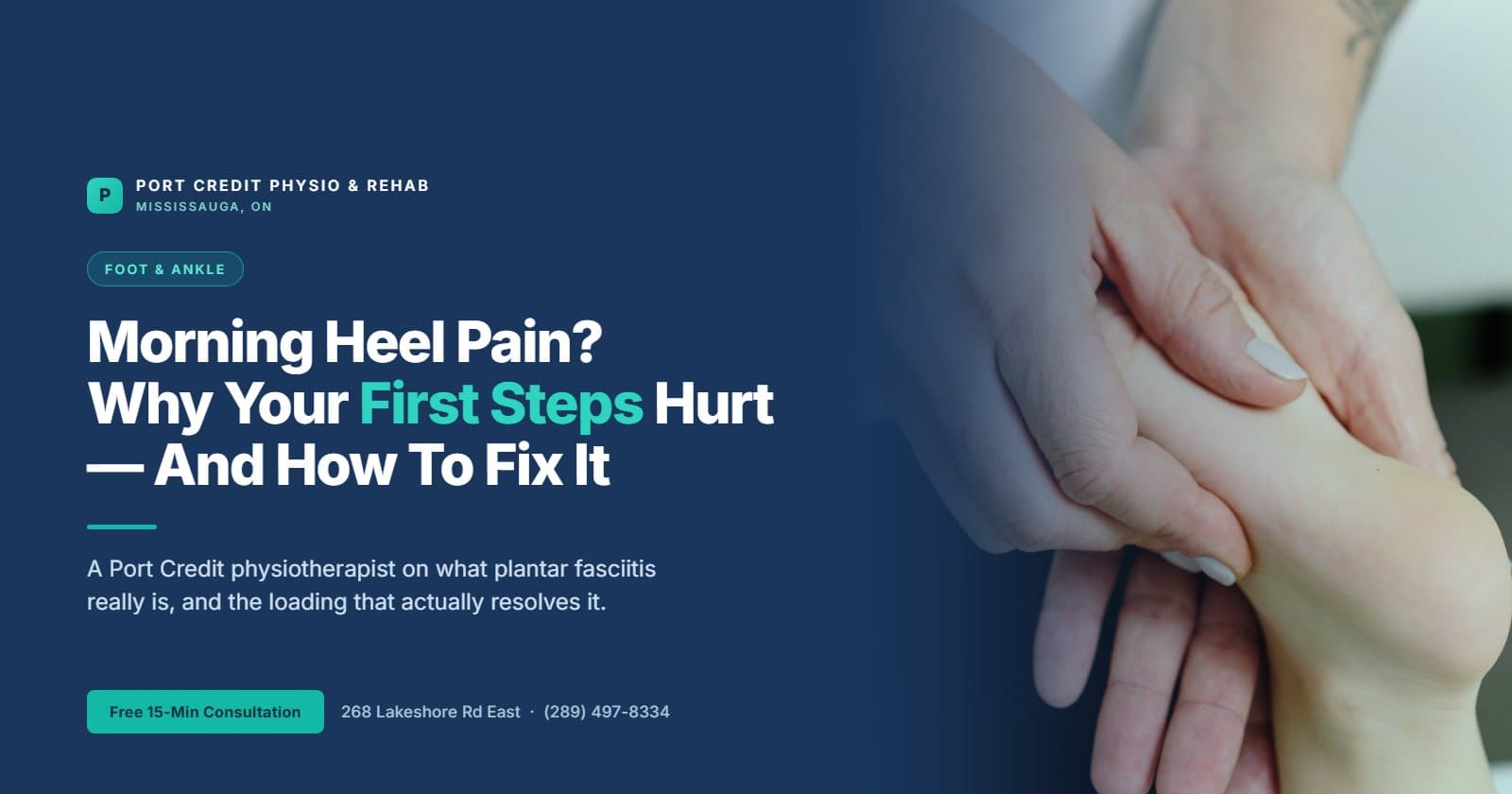
Morning Heel Pain? Why Your First Steps Hurt — and How to Fix It
Sharp heel pain on your first steps? A Port Credit physiotherapist explains why plantar fasciitis hurts most in the morning, the myths that keep people in pain, and the 5 exercises that fix it.
June 1, 2026
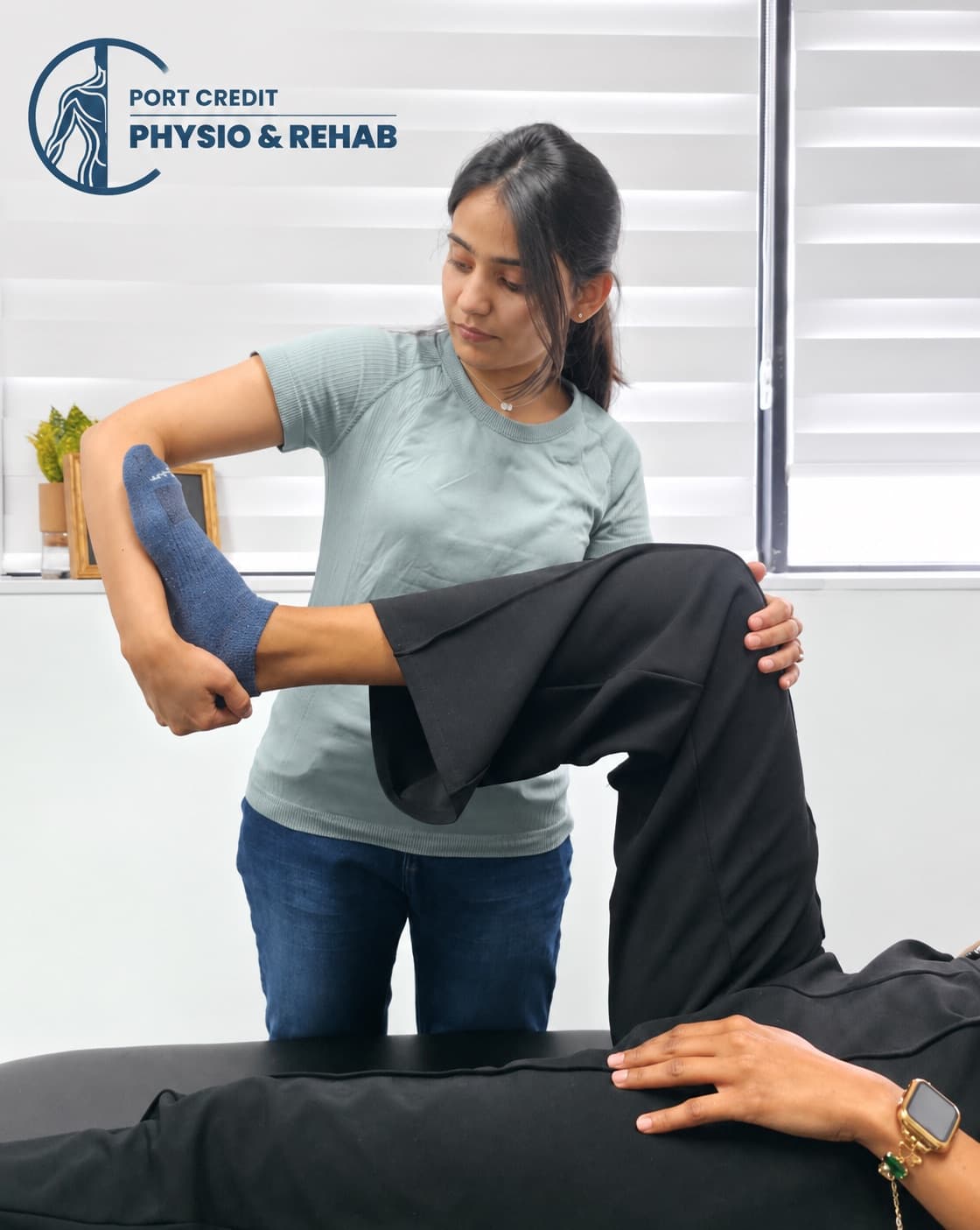
Why Does Running Cause Knee, Heel or Shin Pain?
Knee, heel or shin pain while running? Learn the common causes and when to see a physiotherapist in Port Credit, Mississauga. Our experts explain what your body is trying to tell you.
September 26, 2026
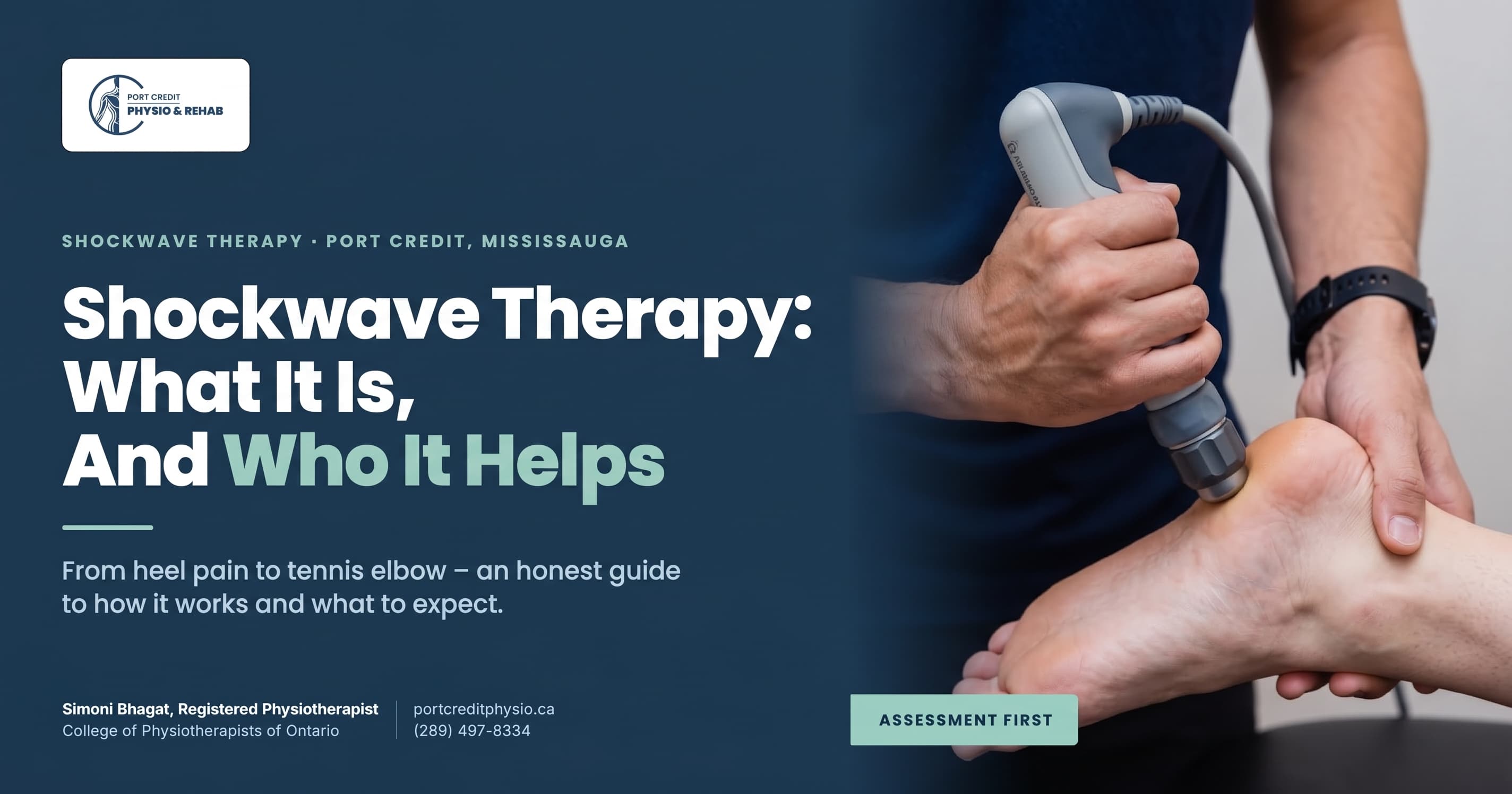
Shockwave Therapy in Port Credit & Mississauga: What It Is and Who It Helps
Considering shockwave therapy for heel pain, tennis elbow, or a stubborn tendon injury? A Port Credit physiotherapist explains how ESWT works, what the research actually says, and what your appointment looks like.
Book Your Free Ankle & Foot Pain Consultation
Talk with our physiotherapist, ask your questions, and get a clear next step with no obligation.