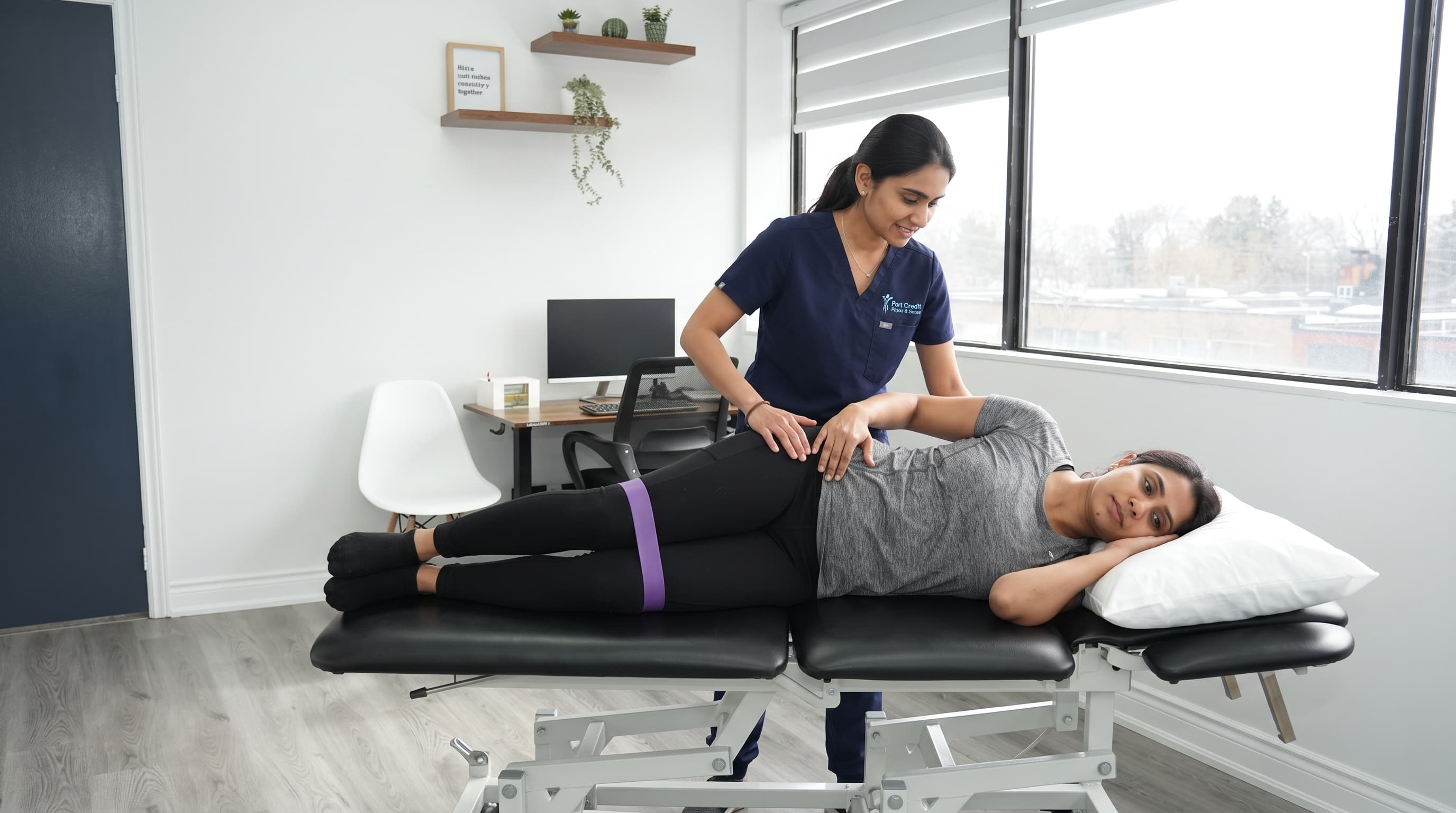
Restore Strength, Mobility & Confidence in Movement
Hip Pain
Hip pain can make everyday movements difficult, like walking, climbing stairs, getting out of the car, or lying on your side at night. It affects people of all ages, from runners and athletes to adults managing arthritis or recovering from surgery. Because the hip works closely with the lower back, pelvis, and knee, finding the true source of pain is essential. At Port Credit Physio & Rehab, we assess the whole picture and build a plan that restores strength, mobility, and confidence in your movement.
Common Hip Conditions We Treat
Hip Bursitis & Greater Trochanteric Pain Syndrome (GTPS)
Pain on the outside of the hip, often worse when lying on that side, climbing stairs, or standing on one leg. Research shows this pain is most often driven by irritated gluteal tendons, with the bursa playing a secondary role.
Gluteal, Hip Flexor & Adductor Tendinopathy
Overload of the tendons around the hip from running, sudden increases in training, or prolonged sitting, causing pain at the side, front, or inner hip and groin.
Hip Osteoarthritis
Gradual changes in joint cartilage that cause stiffness, groin pain, and difficulty with walking, putting on socks, or getting in and out of the car.
Femoroacetabular Impingement (FAI)
A pinching pain in the front of the hip or groin during deep bending, squatting, or sitting, caused by abnormal contact between the ball and socket of the joint.
Hip Labral Tears
Injury to the ring of cartilage that deepens the hip socket, which can cause clicking, catching, locking, or deep groin pain.
Nerve-Related Hip Pain
Pain that feels like it is in the hip but comes from somewhere else. This includes pain referred from the lower back, sciatica, deep gluteal syndrome, and meralgia paresthetica (burning or numbness on the outer thigh from irritation of the lateral femoral cutaneous nerve).
Muscle Strains
Injuries to the hip flexors, glutes, hamstrings, or groin muscles, common in sports involving sprinting, kicking, and quick changes of direction.
Total Hip Replacement (Pre- & Post-Surgery)
Preparing your hip before surgery ("prehab") and guiding your recovery afterward to restore walking, strength, and independence. See our pre- and post-surgical physiotherapy page.
Hip Fracture Rehabilitation
Following your surgeon's protocol to restore safe walking, balance, and confidence after a fracture.
Signs You Should Seek Physiotherapy
Pain on the outside, front, or back of the hip, or pain radiating into the groin, buttock, thigh, or knee
Pain when lying on your side that disturbs your sleep
Clicking, catching, or locking in the hip joint
Stiffness, especially when getting up from sitting or first thing in the morning
Limping, reduced walking distance, or difficulty with stairs
Difficulty putting on shoes and socks or getting in and out of a car
Pain that stops you from running, playing sport, or exercising
How Our Physiotherapy Care Helps
Clinical guidelines recommend exercise and education as first-line treatment for most hip conditions, including osteoarthritis, tendinopathy, and hip impingement. Our programs are built on that evidence and customized to your goals.
Comprehensive Hip, Spine & Movement Assessment
We assess your hip, pelvis, and lower back together, because hip pain is often linked to or referred from the spine. We also look at how you walk, squat, climb stairs, and balance.
McKenzie Method Screening
Our physiotherapist is trained in the McKenzie Method (Parts A & B), which helps us quickly rule in or rule out the lower back as the true source of your hip or thigh pain.
Manual Therapy
Joint mobilizations and soft tissue techniques to reduce pain and restore hip range of motion.
Progressive Strengthening
Targeted loading of the glutes, hip rotators, core, and leg muscles. For tendinopathy, research shows education and progressive loading exercise provide better long-term results than rest or injections alone.
Shockwave Therapy
An evidence-supported option for persistent gluteal tendinopathy and outer hip pain that hasn't settled with exercise alone. See our shockwave therapy page.
Acupuncture & Dry Needling
To reduce pain and release tight, sensitive muscles in the glutes, hip flexors, and deep hip rotators. See our acupuncture & dry needling page.
Pre- & Post-Surgical Rehabilitation
Structured programs for hip replacement, hip arthroscopy, and fracture recovery, in close alignment with your surgeon's guidelines.
Gait Training & Walking Aids
Guidance on walking mechanics, canes, and walkers, and advice on safely setting up your home after surgery.
Education & Activity Modification
Practical tips like avoiding crossing your legs or sleeping on the painful side, so your hip can settle while you stay active.
Functional & Sports Training
Recovery doesn't stop when the pain settles. We guide you back to the activities you love with:
Treadmill-Based Walking & Running Assessment
We watch how you move to identify patterns that overload your hip, then help you correct them.
Stair Training
Rebuilding confidence and strength for stair climbing, especially after surgery.
Agility & Sport-Specific Drills
Change-of-direction, balance, and plyometric work to prepare you for a safe return to sport.
Strength & Conditioning Workouts
Progressive programs that build lasting hip strength and reduce the risk of future injury.
Not Sure Where to Start?
We offer a free 15-minute consultation for anyone unsure whether physiotherapy is right for their hip pain. Speak with our physiotherapist, ask your questions, and get a clear next step with no obligation.
Book Your Free ConsultationWhen to Seek Urgent Medical Care
Go to the emergency department if:
- You cannot bear weight after a fall
- The hip is hot and swollen with a fever
- A child develops a sudden limp or refuses to walk
Common Questions About Hip Pain Treatment
What causes hip pain?
Hip pain can come from the joint itself (arthritis, impingement, labral tears), the surrounding tendons and muscles (tendinopathy, strains), or be referred from the lower back. A physiotherapy assessment helps pinpoint the true source.
Is it better to rest or exercise with hip pain?
In most cases, staying active with modified exercise is better than complete rest. Rest may ease pain in the short term, but it can lead to stiffness and weakness.
What should I avoid with outer hip pain or bursitis?
Try to avoid sleeping on the painful side, crossing your legs, sitting in very low chairs, and standing with your weight shifted onto one hip. These positions compress the irritated tendons.
Can physiotherapy help hip arthritis?
Yes. Exercise therapy is a first-line recommended treatment for hip osteoarthritis. It can reduce pain, improve function, and in many cases help delay the need for surgery.
When should I start physiotherapy after hip replacement surgery?
Ideally, before surgery. Prehab helps you recover faster. After surgery, most people begin outpatient physiotherapy within the first couple of weeks, following clearance from their surgeon.
My hip pain goes down my leg. Is it my hip or my back?
It could be either. Pain that travels below the knee, or comes with numbness or tingling, often points to the lower back. Our assessment includes a spine screen to find out.
Related Services
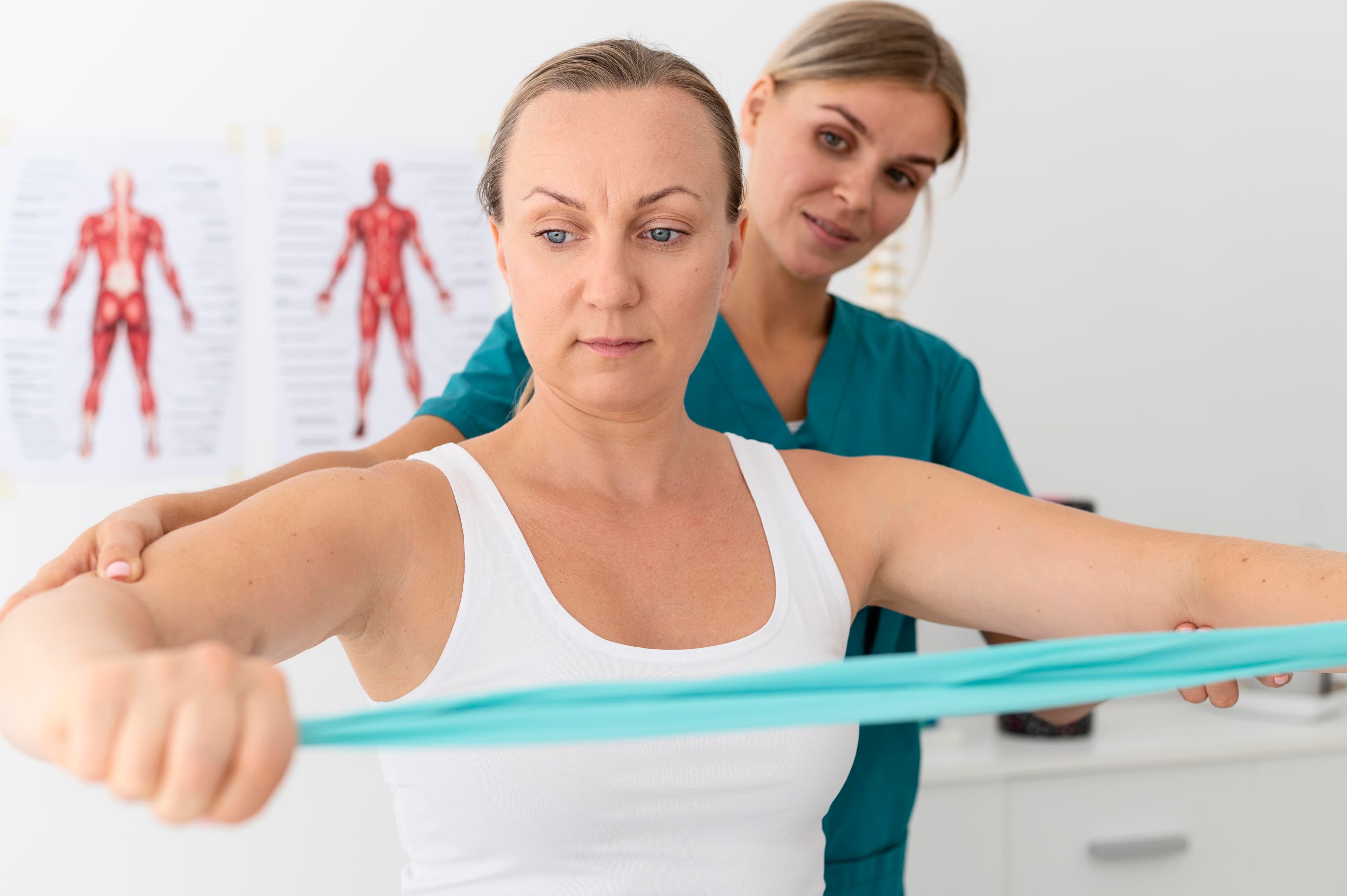
Physiotherapy
Evidence-based physiotherapy in Port Credit, Mississauga. McKenzie Method® & Graston Technique® for back pain, sciatica, and sports injuries.
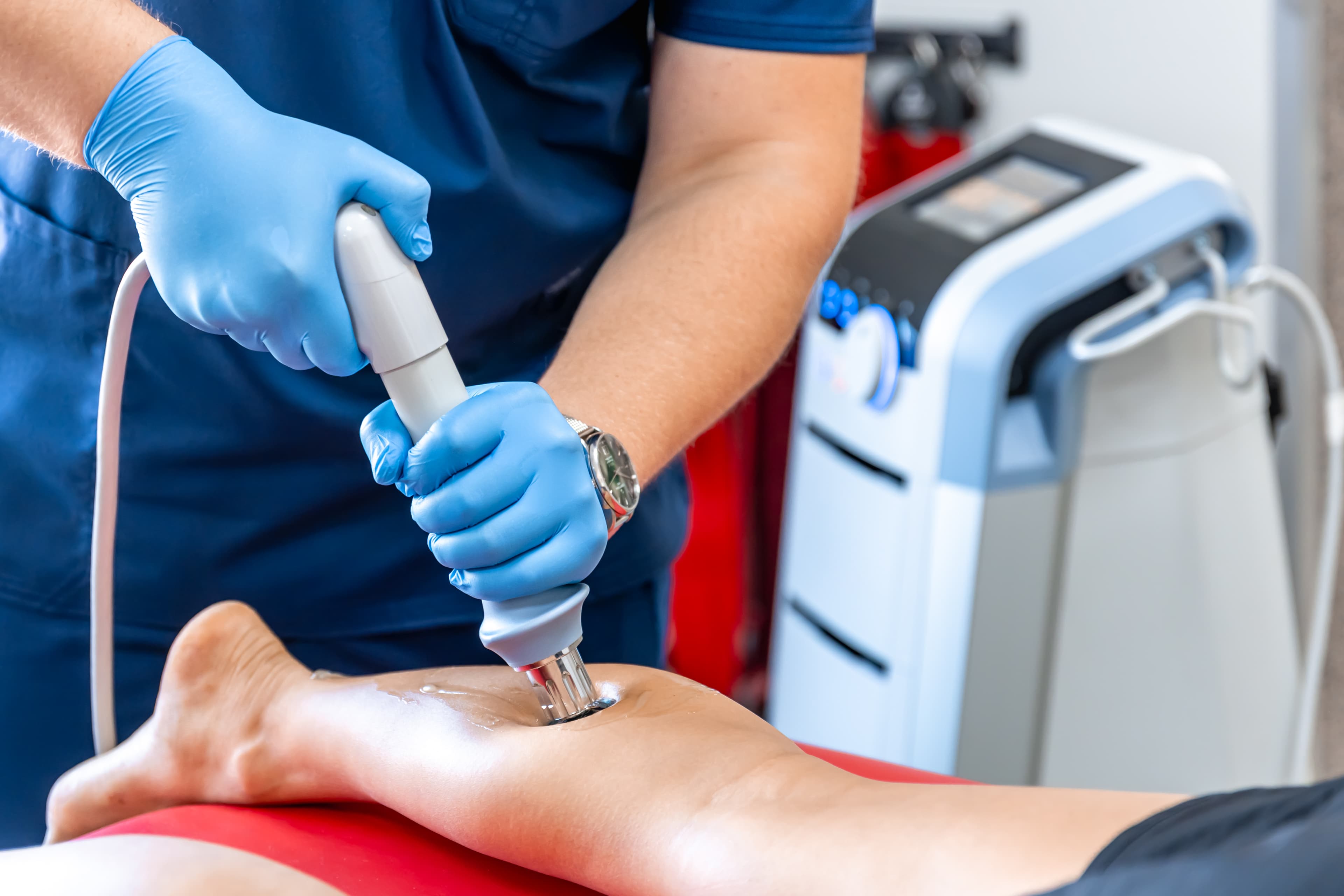
Shockwave Therapy
Shockwave therapy (ESWT) for plantar fasciitis, tendinitis, tennis elbow, and calcific shoulder pain. Non-invasive. Open 7 days.
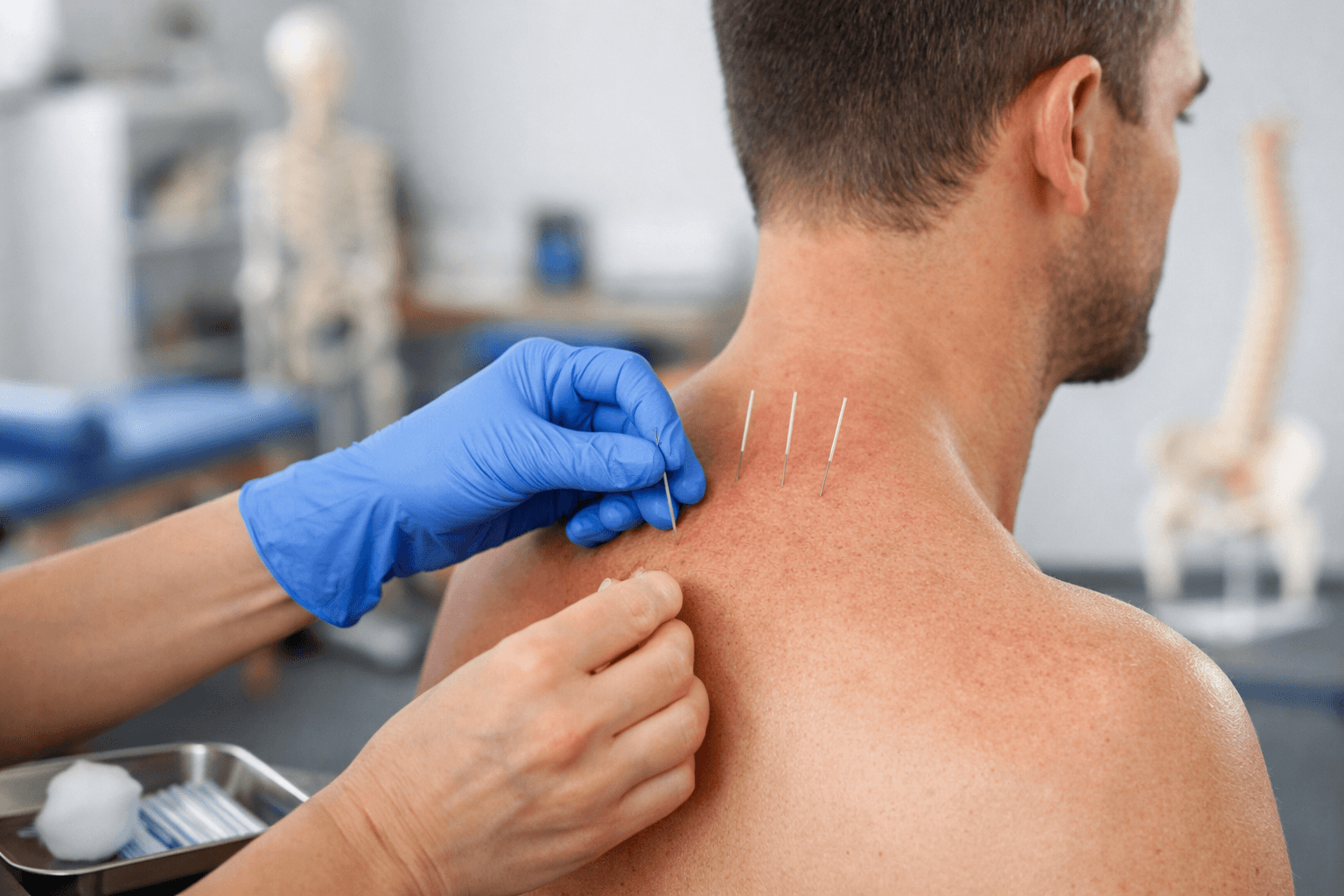
Acupuncture & Dry Needling
Acupuncture and dry needling by registered physiotherapists for muscle pain, back pain, and headaches.
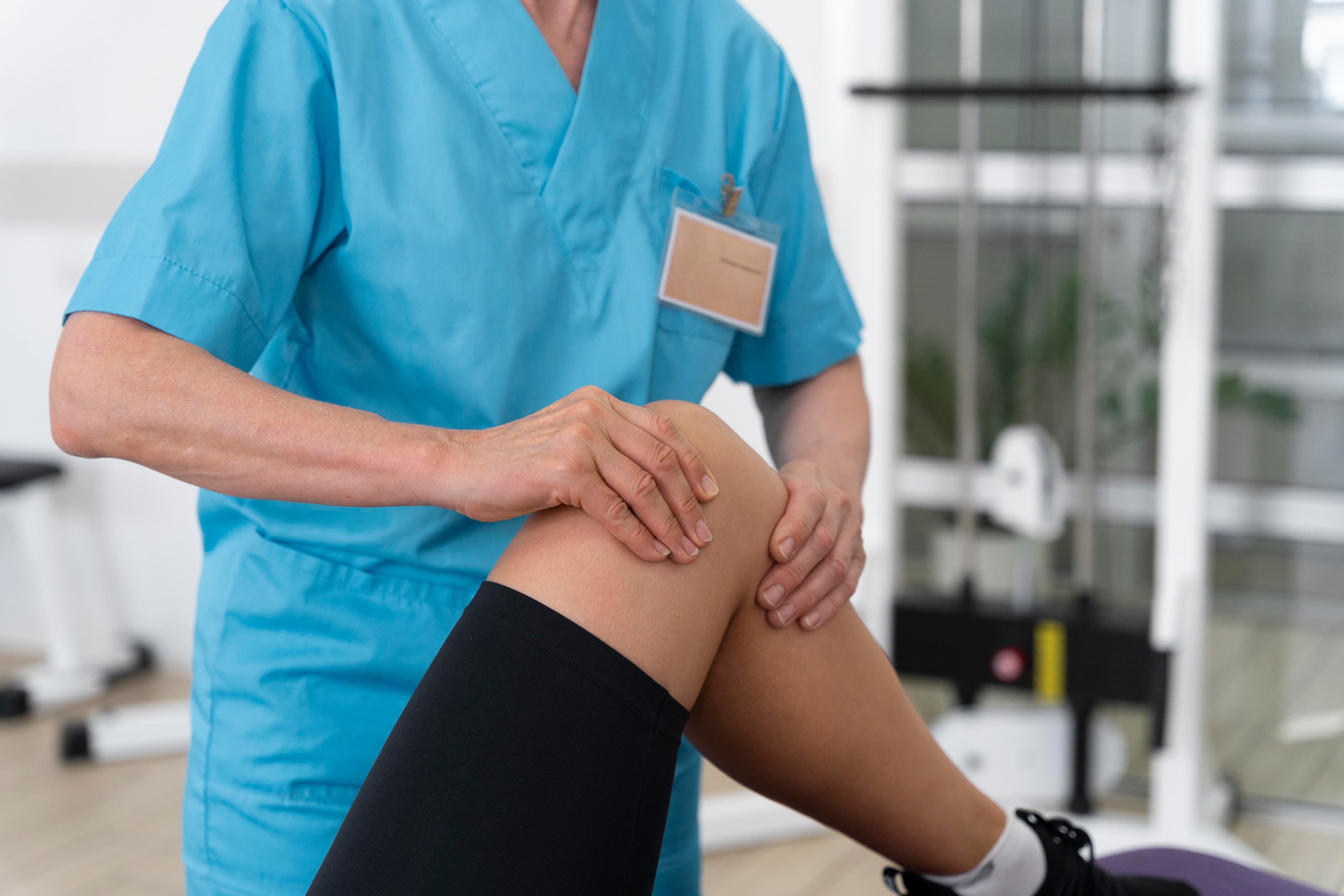
Pre- and Post-Surgical Physiotherapy
Prehab and post-surgery physiotherapy in Port Credit, Mississauga. One-on-one in-clinic or in-home care, surgeon-aligned plans.
Related Conditions
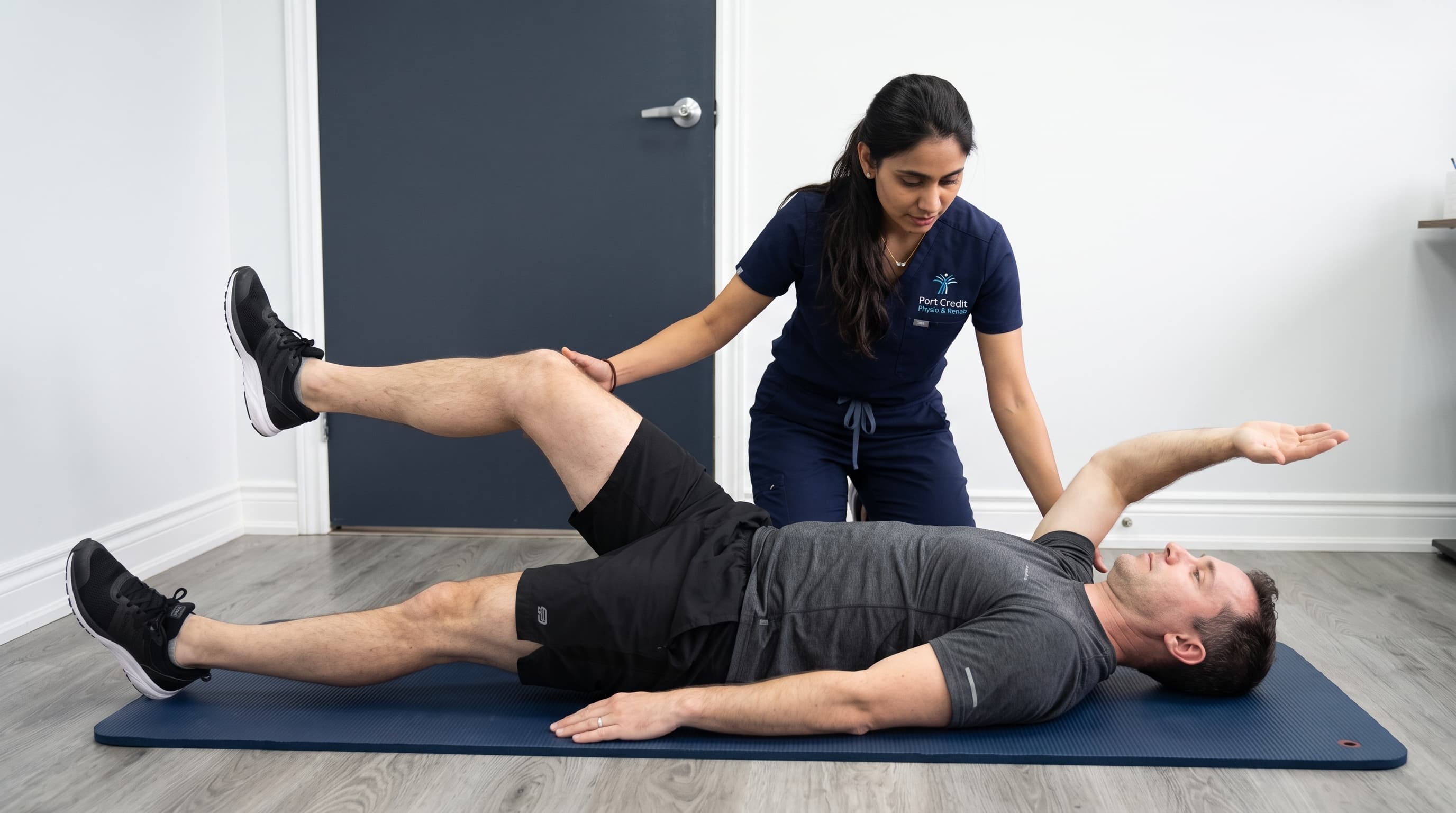
Lower Back Pain & Sciatica
Lower back pain or sciatica? Our Port Credit physiotherapists use the McKenzie Method, hands-on care, and gym-based core training. Book today.
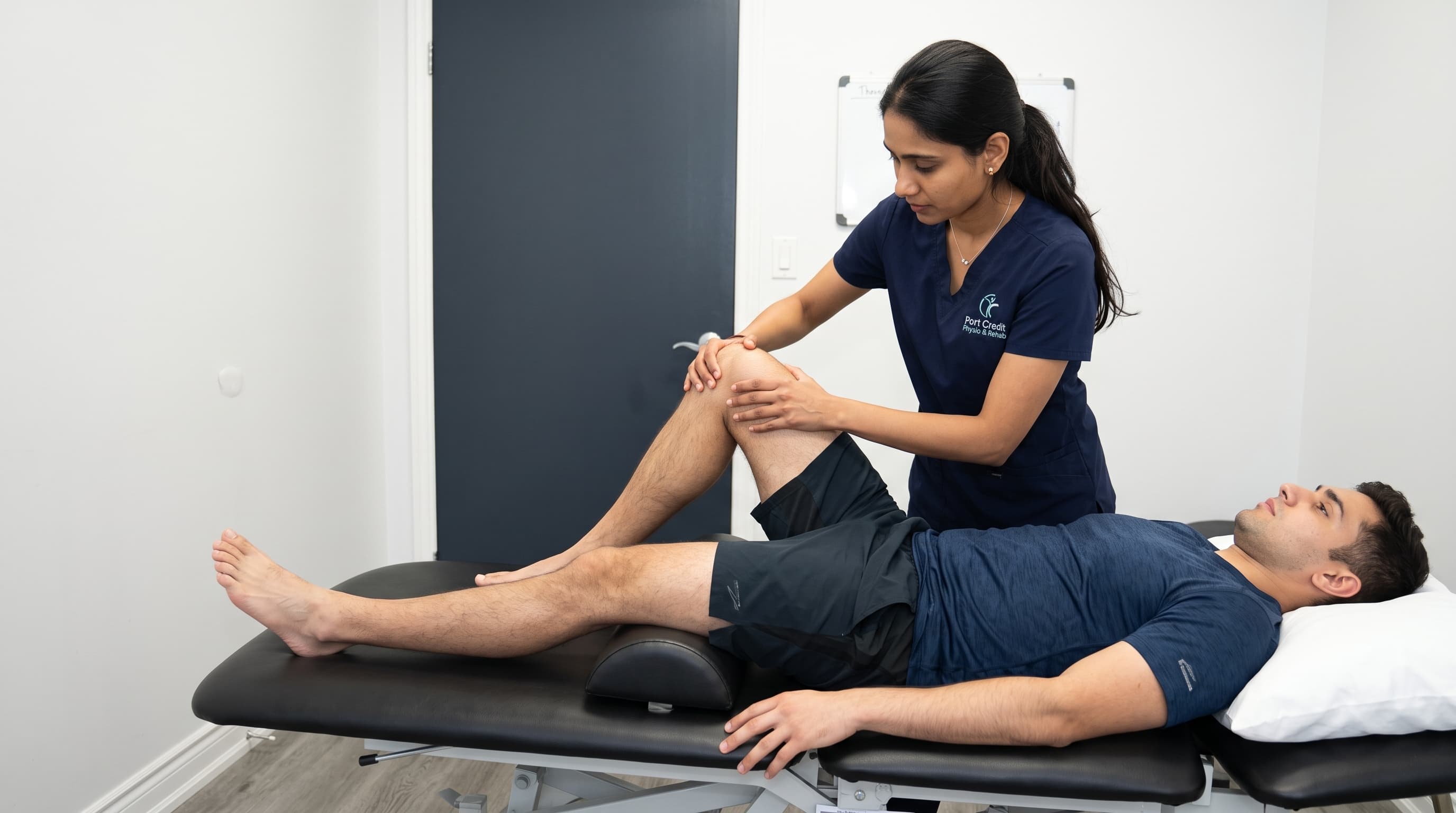
Knee Pain
Evidence-based knee pain treatment in Port Credit, Mississauga for ACL and meniscus injuries, arthritis, runner's knee, tendinopathy and knee replacement rehab. Free 15-minute consultation.
Book Your Free Hip Pain Consultation
Speak with our physiotherapist, ask your questions, and get a clear next step with no obligation.