A Rehab Plan Matched to Your Procedure
Post-Surgical Rehab: Knee, Hip, Shoulder, Spine & Ankle Surgeries
Every surgery heals differently, so every rehab plan should too. A knee replacement needs early motion, while a rotator cuff repair needs weeks of protection before the muscle can work. Our Registered Physiotherapists in Port Credit, Mississauga, treat patients before and after a wide range of orthopedic surgeries, using plans matched to your procedure and your surgeon's protocol.
Below, you'll find the surgeries we see most often and what rehab typically focuses on for each. Timelines are general guides; your surgeon's instructions always come first. For a full overview of how we structure in-clinic and in-home surgical care, see our Pre- and Post-Surgical Physiotherapy service page.
Joint Replacement Rehab
Knee Replacement Physiotherapy (Total Knee Arthroplasty)
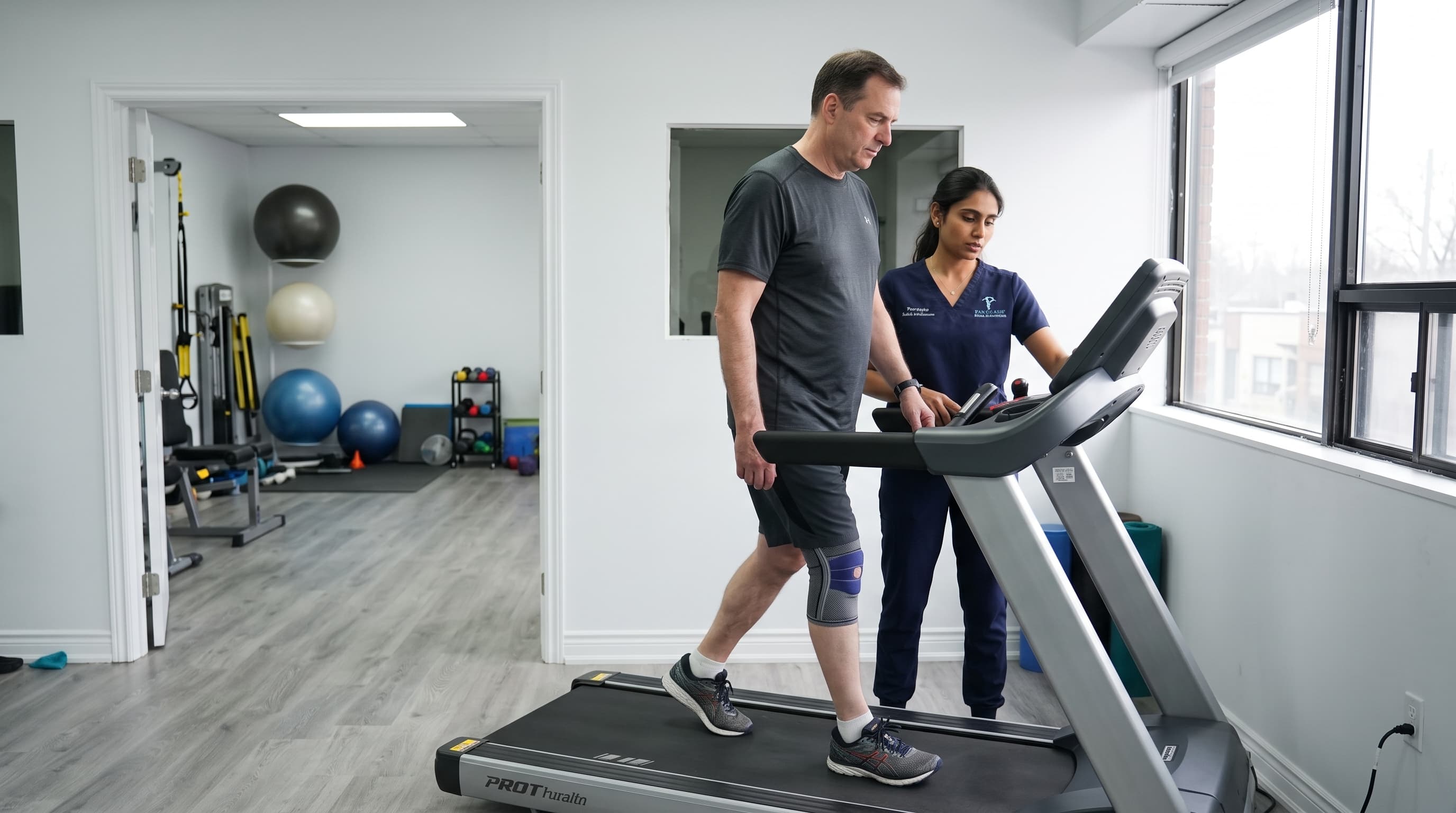
The biggest early priority after a knee replacement is getting the knee fully straight. A knee that stays slightly bent changes how you walk and loads the joint unevenly. We also work on bending, usually aiming for enough motion to manage stairs and get out of a chair comfortably. Rehab focuses on swelling control, reactivating the quadriceps, and walking without a limp. Most people make major gains over 3 to 6 months, with strength continuing to improve for up to a year.
Hip Replacement Physiotherapy (Total Hip Arthroplasty)
Your movement precautions after hip replacement depend on your surgeon's approach, so we follow your specific instructions closely. Early rehab focuses on safe transfers, walking, and managing stairs. We then rebuild strength in the glutes and hip muscles, which keeps your pelvis level when you walk. Most people return to daily activities within 6 to 12 weeks.
Shoulder Replacement Rehab (Total and Reverse)
Total and reverse shoulder replacements rely on different muscles, so their rehab plans differ. A reverse replacement depends heavily on the deltoid, while a standard replacement requires protecting the repaired tendon at the front of the shoulder. Most patients wear a sling for several weeks, then progress from gentle assisted motion to functional strength for reaching, dressing, and lifting.
Knee Ligament & Cartilage Surgery Rehab
ACL Reconstruction Rehab
ACL rehab is a long process with clear stages. Early goals include full knee extension, swelling control, and getting the quadriceps working again. Later stages build strength, balance, jumping, and cutting control. Return to pivoting sports usually takes 9 to 12 months and should be based on strength and movement testing, not just time. We also treat PCL and MCL reconstructions using protocols specific to each ligament.
Meniscus Repair and Arthroscopic Knee Surgery
A meniscus repair (stitching the cartilage) and a meniscus trim recover very differently. Repairs often come with several weeks of weight-bearing and bending limits to protect the stitches. Trims and debridements usually allow faster loading, with many people back to daily function in 4 to 8 weeks.
Shoulder Surgery Rehab
Rotator Cuff Repair Physiotherapy
A tendon repaired to bone needs time to heal, typically 12 weeks or more before it's ready for real strengthening. Most patients spend the first several weeks in a sling with gentle, guided motion only. We then progress to active movement and, later, strength work. Full recovery commonly takes 4 to 6 months, with strength improving for up to a year.
Labral Repair (Bankart and SLAP) and Subacromial Decompression
Labral repairs need protection to let the repaired tissue reattach, followed by careful restoration of motion and shoulder stability. Decompressions usually allow earlier movement. For both, we focus on shoulder blade control and rotator cuff strength to protect the joint long term.
Spine Surgery Rehab
Discectomy, Laminectomy, and Spinal Fusion Rehabilitation
Walking usually starts very early after spine surgery, and it's one of the best things you can do. Your surgeon may limit bending, lifting, and twisting for a period, especially after a fusion. Rehab builds endurance in the trunk and hip muscles, improves posture and movement confidence, and prepares you for work and daily tasks. Fusions typically need about three months of bone healing before heavier loading.
Foot & Ankle Surgery Rehab
Achilles Tendon Repair
Achilles rehab usually begins in a walking boot with heel wedges that are gradually reduced. We restore ankle motion carefully to avoid overstretching the repair, then rebuild calf strength, which is often the slowest part of recovery. Running typically returns around 6 months, with sport taking longer.
Ankle Fracture Surgery (ORIF) and Bunionectomy
After ankle fracture surgery, you may have weeks of limited weight-bearing. Once cleared, we focus on ankle stiffness, calf strength, and balance, which is often affected after ankle injuries. After bunion surgery, rehab targets big toe mobility and a normal walking pattern.
Is Your Recovery on Track?
Recovery isn't a straight line, but some signs suggest your plan needs adjusting. Book an assessment if you notice:
Stiffness that isn't improving after the first few weeks
A limp that persists after you've stopped using walking aids
Pain that's getting worse instead of gradually easing
Difficulty with stairs, getting out of a chair, or reaching overhead months after surgery
Low confidence returning to work, sport, or daily activities
If you have calf pain and swelling, fever, a worsening incision, shortness of breath, or chest pain, contact your surgeon or seek emergency care right away.
Why Patients in Port Credit and Mississauga Choose Us
One-on-one care with a Registered Physiotherapist at every visit
Surgeon-aligned plans built around your specific procedure and protocol
In-clinic or in-home options for the early weeks when travel is hard
Local and convenient for patients in Port Credit, Mineola, Lakeview, Lorne Park, Clarkson, and Cooksville
Direct billing to most major extended health insurers
Signs That Need Immediate Attention
Contact your surgeon or seek emergency care right away if you have:
- Calf pain and swelling after surgery
- Fever or a worsening incision
- Shortness of breath or chest pain
Common Questions About Post-Surgical Rehab: Knee, Hip, Shoulder, Spine & Ankle Surgeries Treatment
Can physiotherapy still help if my surgery was months ago?
Yes. Many patients come to us months after surgery with lingering stiffness, weakness, or a limp. While early rehab is ideal, strength, balance, and function can keep improving long after the tissue has healed.
Do you follow my surgeon's post-op protocol?
Always. Please bring your protocol sheet or discharge instructions to your first visit. If anything is unclear, we'll work within the most protective guidelines until it's confirmed.
What should I bring to my first post-surgery appointment?
Bring your surgical protocol or discharge papers, a list of medications, your insurance details, and any braces, slings, or walking aids you're using. Wear loose clothing that lets us see and move the surgical area.
Can I start rehab while I still use a walker or crutches?
Yes. Most patients start physiotherapy while still using a walking aid. Part of our job is helping you progress safely from a walker to a cane to walking on your own. If travel is difficult, in-home physiotherapy is an option.
Related Services
Pre- and Post-Surgical Physiotherapy
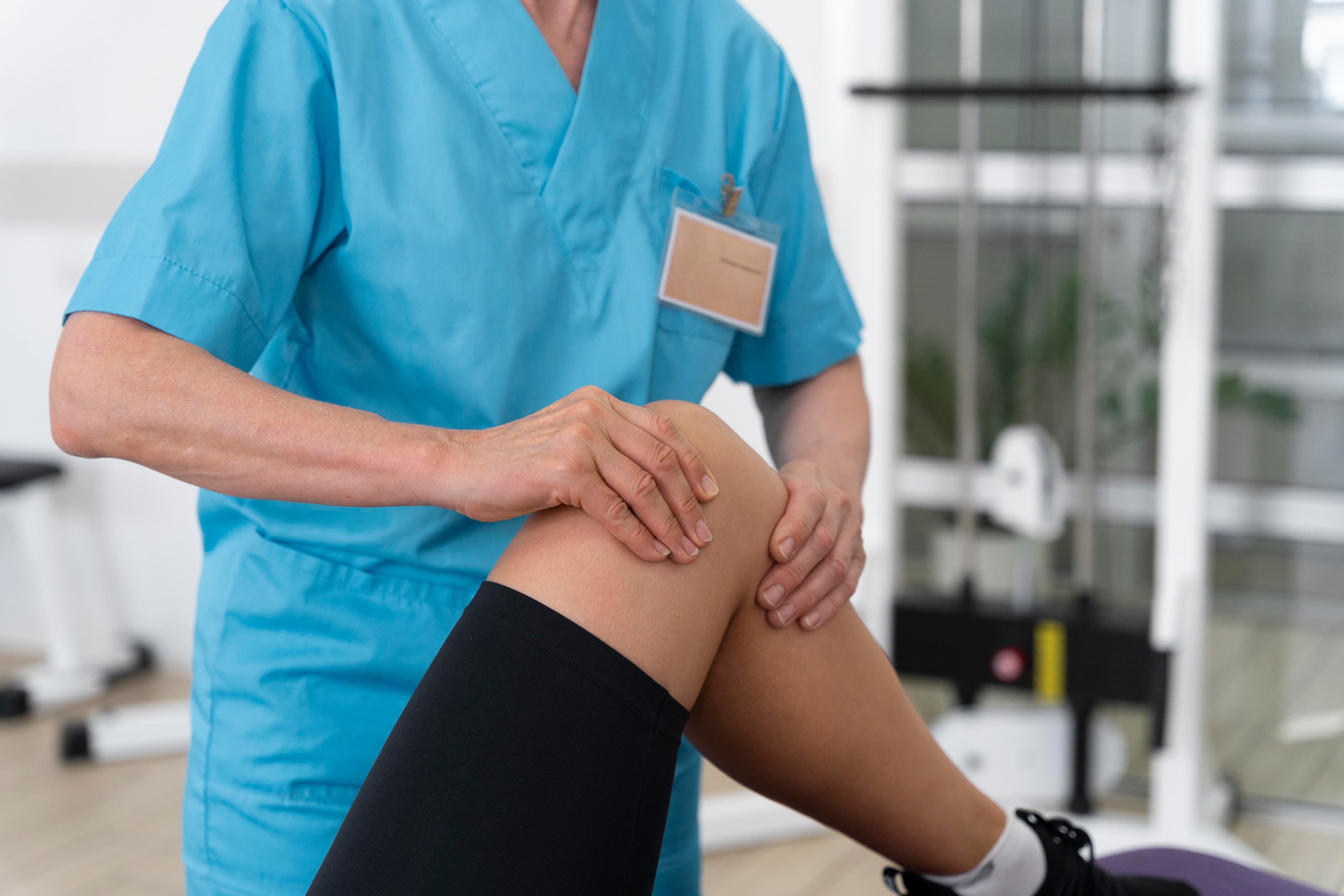
Prehab and post-surgery physiotherapy in Port Credit, Mississauga. One-on-one in-clinic or in-home care, surgeon-aligned plans.

In-Home Physiotherapy
45-minute, one-on-one in-home physiotherapy across Mississauga for falls prevention, stroke, Parkinson's, and post-surgery rehab.
Physiotherapy
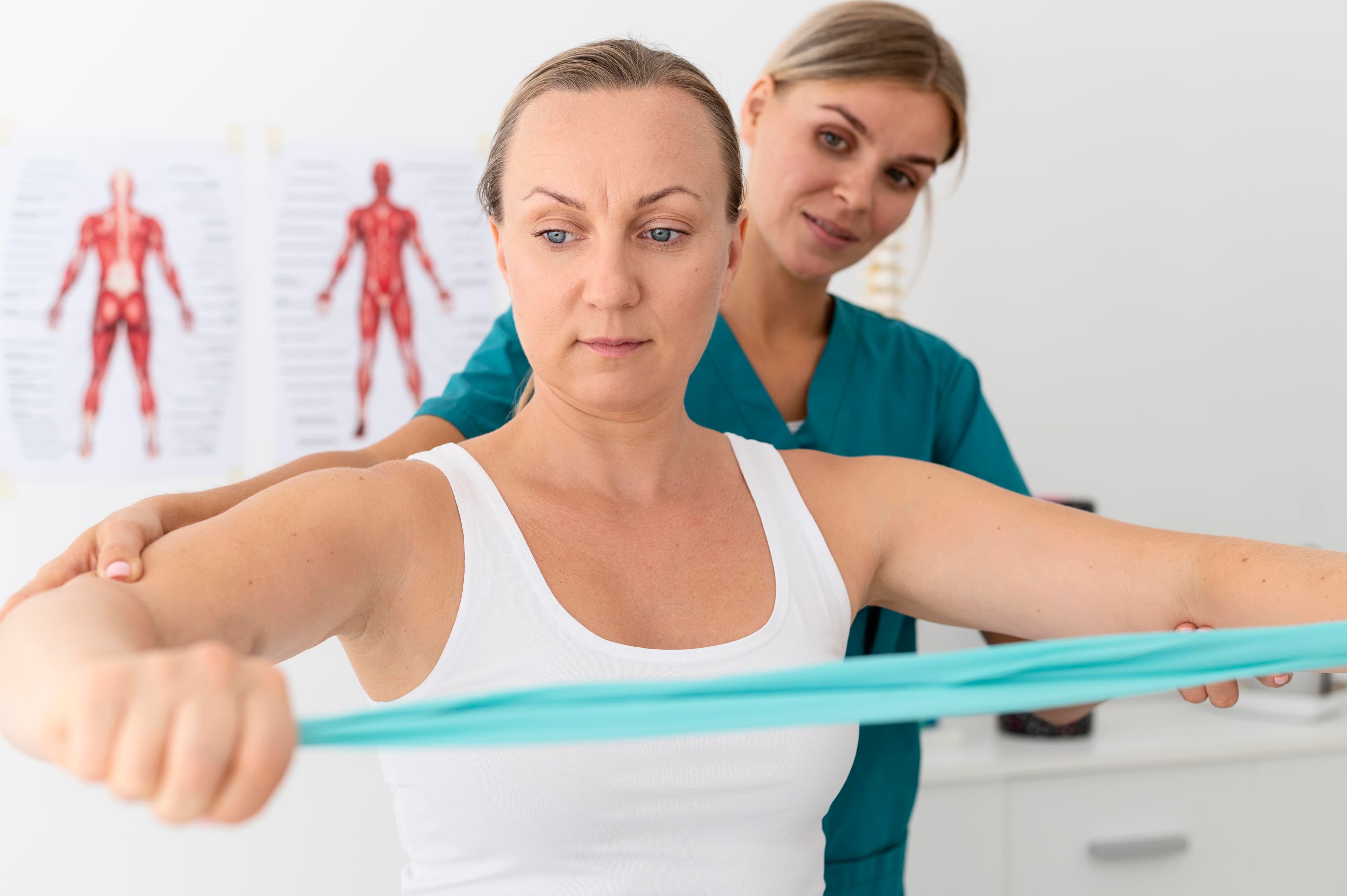
Evidence-based physiotherapy in Port Credit, Mississauga. McKenzie Method® & Graston Technique® for back pain, sciatica, and sports injuries.
Related Conditions
Knee Pain
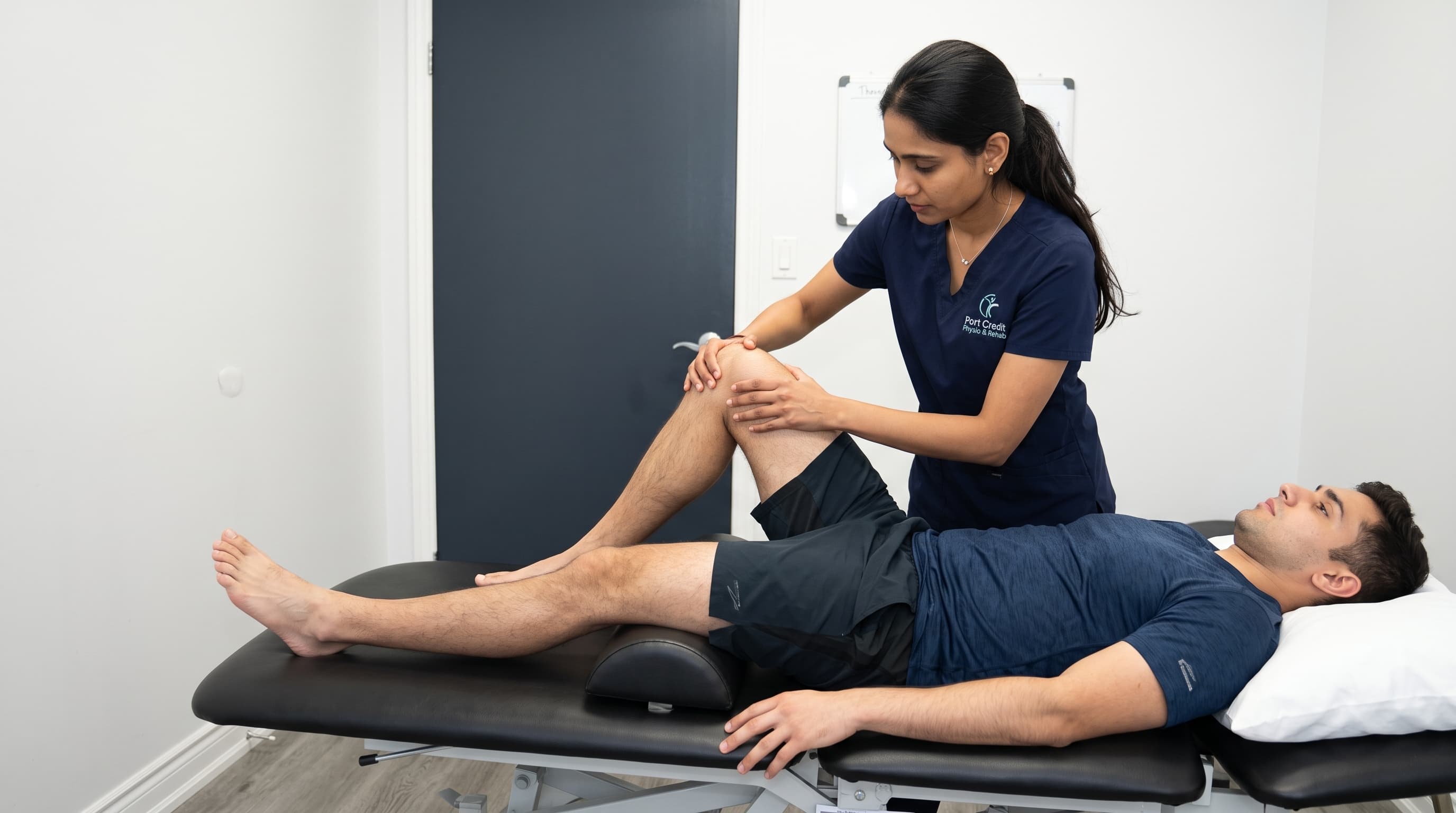
Evidence-based knee pain treatment in Port Credit, Mississauga for ACL and meniscus injuries, arthritis, runner's knee, tendinopathy and knee replacement rehab. Free 15-minute consultation.
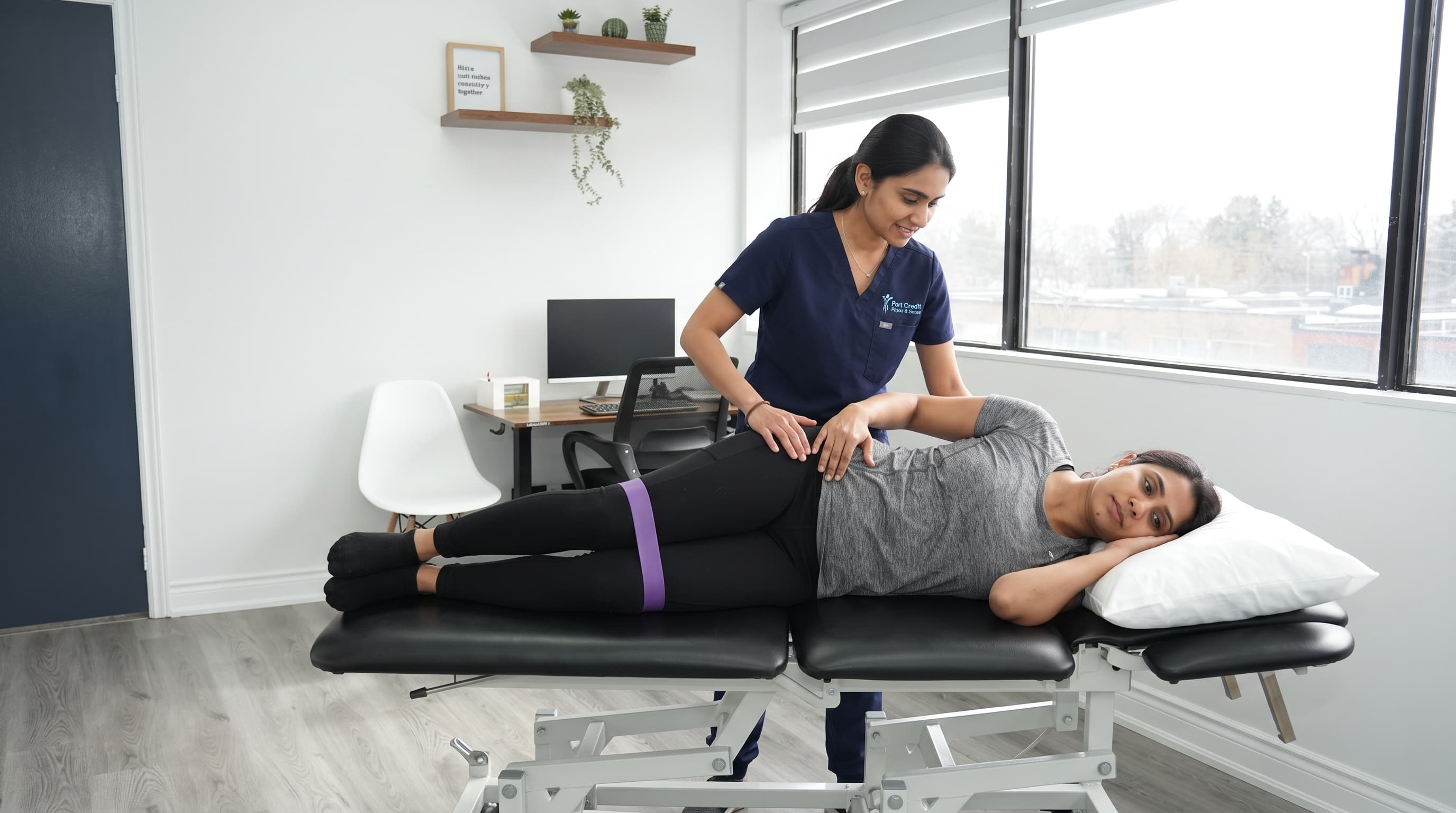
Hip Pain
Evidence-based hip pain treatment in Port Credit, Mississauga for bursitis, tendinopathy, arthritis, hip impingement and hip replacement rehab. Free 15-minute consultation.
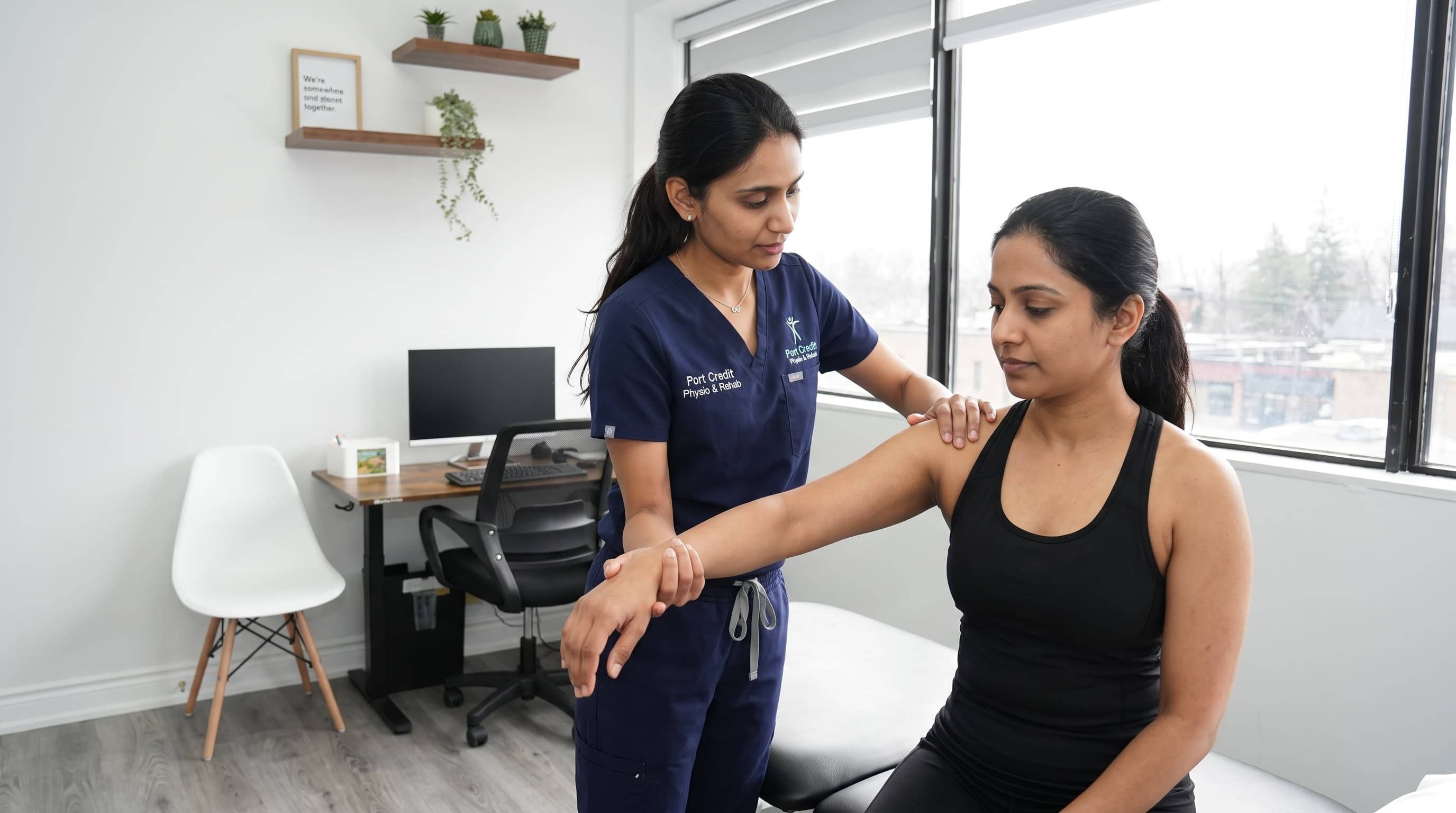
Shoulder Pain & Rotator Cuff Tears
Shoulder pain or a torn rotator cuff? Our Port Credit physiotherapists in Mississauga find the cause and build a plan to restore strength. Book today.
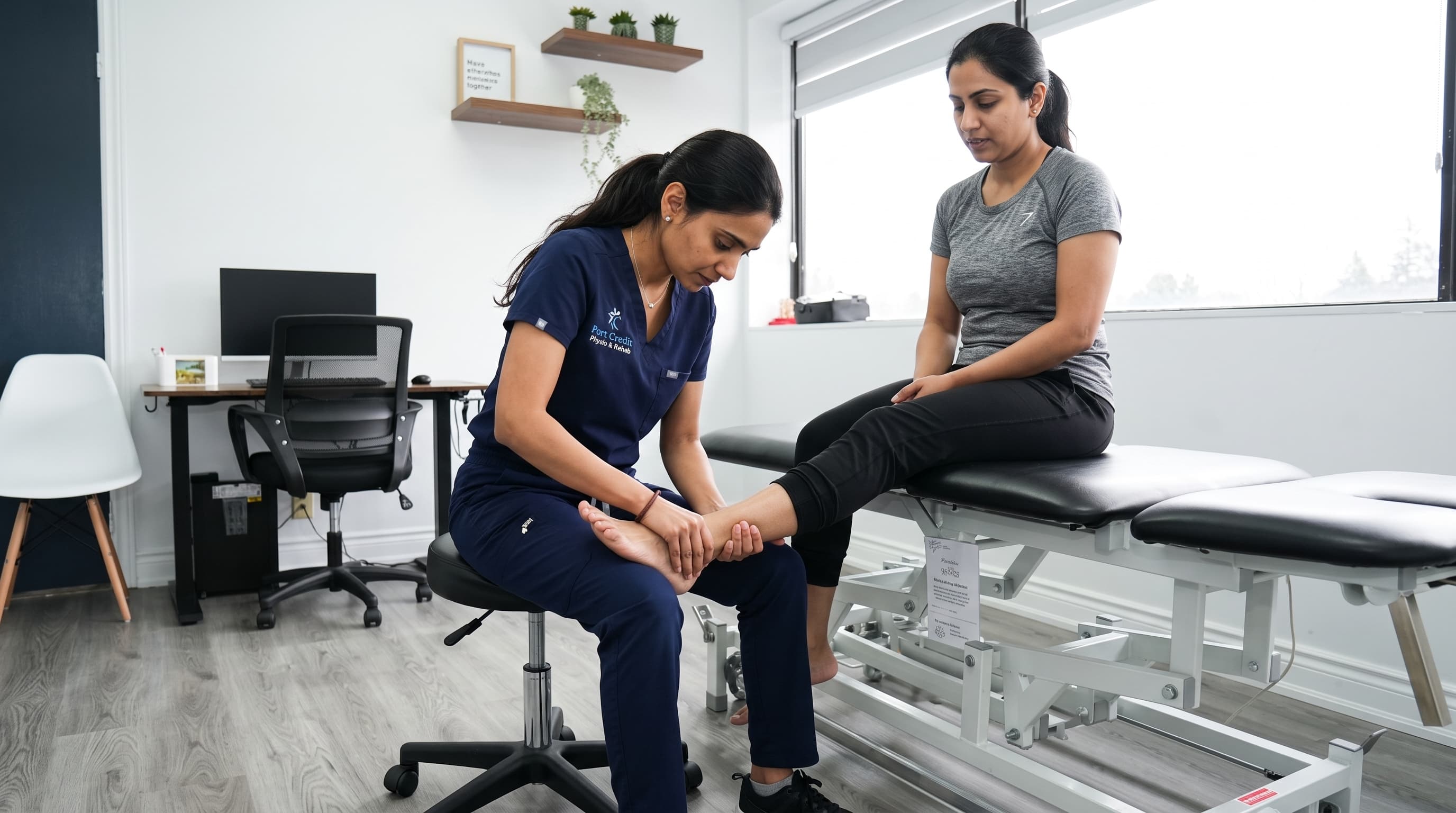
Ankle & Foot Pain
Evidence-based ankle and foot pain treatment in Port Credit, Mississauga for ankle sprains, Achilles tendinopathy, plantar fasciitis, fractures and post-surgical rehab. Free 15-minute consultation.
Start Your Surgical Recovery with a Plan
Whether you're preparing for surgery or recovering from one, our Port Credit physiotherapists will build a plan around your procedure, your protocol, and your goals.